 Pin it
 My first pho wasn't made in a restaurant—it was 11 PM on a Tuesday when I craved something warm but didn't have hours to spare. I remembered my neighbor mentioning a shortcut: skip the overnight broth, keep the aromatics, and let the technique carry you. Thirty-five minutes later, I had a steaming bowl that tasted like I'd been simmering spices all day. That night taught me that sometimes the best version of a dish isn't the most complicated one.
I made this for my sister the morning after she'd worked a brutal overnight shift. She was exhausted, but the moment that lime-bright aroma filled the kitchen and she saw the noodles steaming in their bowls, something shifted in her expression. She added so much basil it was almost comical, squeezed lime juice everywhere, and ate the whole thing without saying much—which meant everything. That's when I realized pho isn't just fast food; it's an embrace in a bowl.
Ingredients
- Low-sodium beef or chicken broth (8 cups): This is your foundation, so don't skip quality here—a thin, salty broth will ruin the entire dish, but good broth means you're already halfway to something special.
- Onion and ginger: These two create the soul of the broth, so don't be shy with them; if you have time, char them lightly in a dry pan first to deepen the flavor.
- Star anise, cinnamon, and cloves: Each spice matters individually—don't substitute or skip any, as they create that unmistakable pho warmth together.
- Fish sauce and soy sauce: These are umami anchors; fish sauce might smell funky, but trust it completely and taste as you go.
- Rice noodles (bánh phở): Fresh noodles cook in seconds and give a silkier bite than dried, but dried works just fine if that's what you have.
- Beef sirloin or eye round: Slice it thin—almost transparent—so the hot broth cooks it instantly without chewy bits.
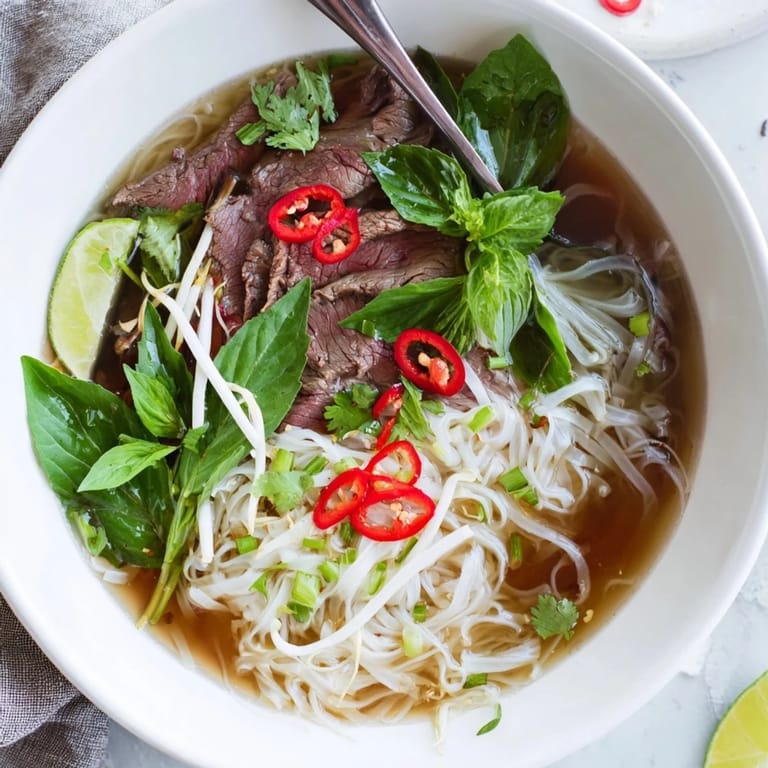
- Fresh herbs and garnishes: These aren't optional flourishes; they're the whole point, so grab handfuls of basil, cilantro, and bean sprouts and don't hold back.
Tired of Takeout? 🥡
Get 10 meals you can make faster than delivery arrives. Seriously.
One email. No spam. Unsubscribe anytime.
Instructions
- Build your flavor base:
- Combine broth with onion, ginger, star anise, cinnamon, and cloves in a large pot. Bring it to a rolling boil, then dial it down to a gentle simmer where you can hear the quiet bubbling. Let it go for 20 minutes—you'll see the broth turn a pale golden color as the spices release their oils.
- Season and strain:
- Add fish sauce, soy sauce, sugar, and salt, then simmer 5 more minutes until everything melds together. Pour the broth through a fine-mesh strainer to catch all the solids, leaving you with clear, fragrant liquid. Keep it hot over low heat while you finish everything else.
- Cook the noodles:
- Follow your package instructions for the rice noodles—they usually need just 4-5 minutes in boiling water if dried, or a quick hot water bath if fresh. Drain them well and divide among four large bowls, letting them sit loosely so the broth can reach every strand.
- Arrange the raw meat:
- Layer thin slices of beef or chicken directly over the noodles in each bowl. It looks delicate and raw, which can feel strange, but that's exactly right—the hot broth does the cooking in seconds.
- Pour and watch the magic:
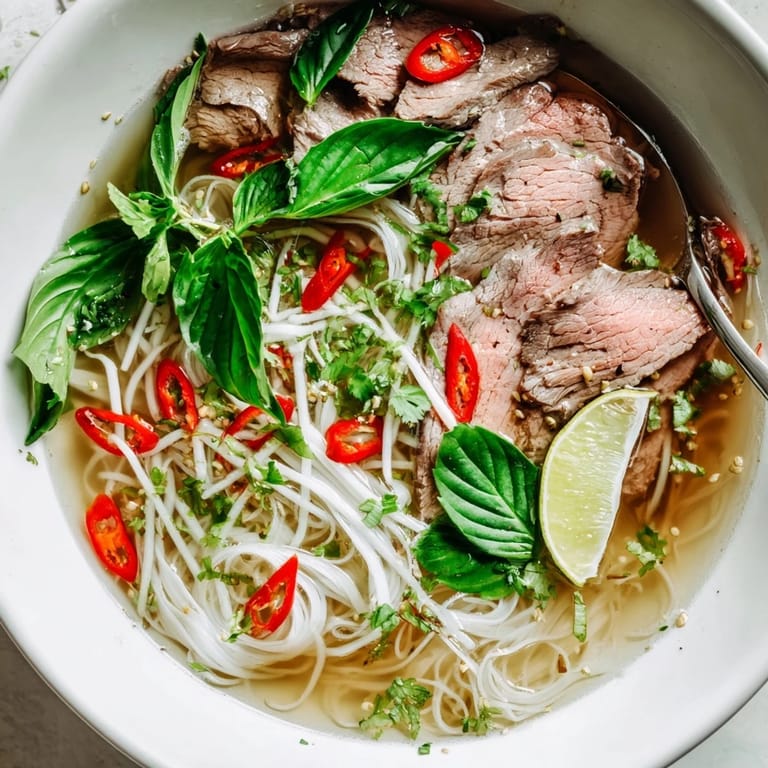
- Slowly ladle the steaming broth over the meat and noodles, and you'll actually see the beef go from translucent to cooked pink before your eyes. It takes maybe 30 seconds of heat.
- Top and serve:
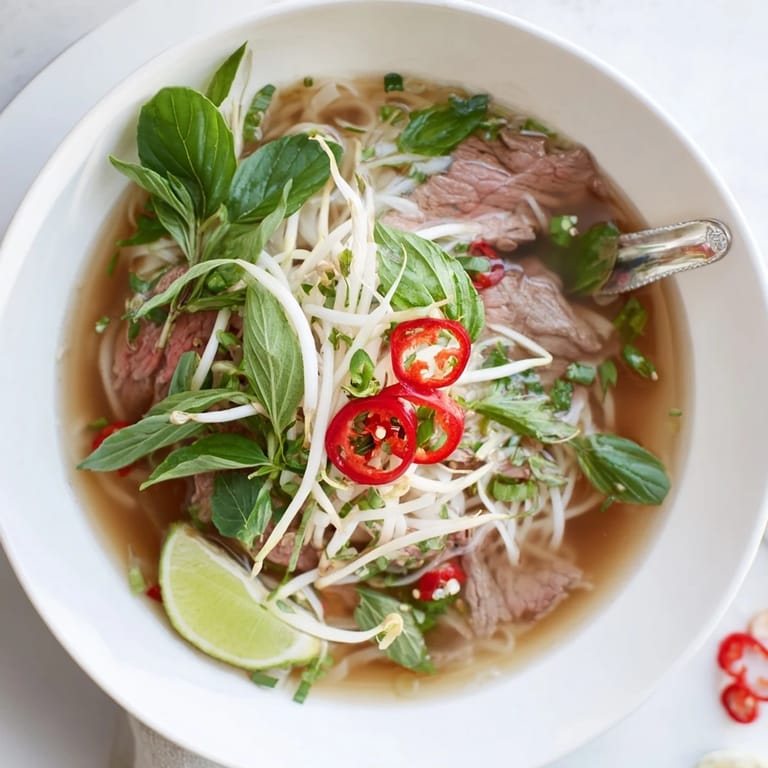
- Scatter bean sprouts, basil, cilantro, scallions, and chili over each bowl, then serve lime wedges and sauces on the side so everyone can adjust their bowl to taste.
 Pin it
 There's a moment in every pho bowl where you pause before eating, and the steam rises up with all those herbal, warm spices hitting your face. That moment is when you realize food doesn't need to be complicated to be comforting. This dish proves that simplicity and flavor aren't enemies—they're partners.
The Shortcut That Changed Everything
The biggest revelation in making pho express wasn't about cutting corners—it was about understanding what actually takes time and what doesn't. Classic pho simmers bone broth for hours, but most of that time is extracting collagen and deepening flavor from bones you don't have here. With good broth as your starting point and properly balanced aromatics, you skip straight to fragrance and depth. I learned this doesn't mean less authentic; it means smarter cooking.
Customizing Your Bowl
The beauty of pho is that it's almost rude not to personalize it. My friend adds mint and fried shallots; my mom squeezes lime and Sriracha until hers is barely broth anymore; my coworker is a cilantro minimalist. There's no wrong way to build your bowl, which is probably why pho has survived centuries of cooking. The base gives you permission to be yourself.
Speed Without Sacrifice
Making pho in 35 minutes feels impossible until you realize that modern convenience—good broth in a carton, pre-sliced meat from the butcher counter, fresh noodles from the Asian market—isn't cheating; it's respecting your time. Vietnamese home cooks use shortcuts too when they're hungry after work. The real skill is knowing which corners to cut and which to keep sacred.
- Charring the ginger and onion in a dry pan before adding them deepens the broth more than you'd expect in just those few minutes.
- Keep your broth hot and ready before you slice the meat so nothing cools down or gets rubbery while you're juggling bowls.
- Toast your spices for 30 seconds in a dry pan before adding broth if you want them to bloom even more vibrantly.
 Pin it
 Pho teaches you that some of the most beloved dishes come from patience, yes, but also from knowing when to trust a method and move forward. This bowl will be ready before your craving passes, and that's exactly the point.
Recipe Questions & Answers
- → What spices give the broth its unique flavor?
The broth is infused with star anise, cinnamon, cloves, and fresh ginger, which provide its distinctive aromatic and slightly sweet notes.
- → Can I substitute the meat with a vegetarian option?
Yes, tofu can replace the meat, and using vegetable broth ensures a vegetarian-friendly version while maintaining rich flavors.
- → How are the noodles prepared in this dish?
Flat rice noodles are cooked separately according to package instructions, then served in bowls before adding the hot broth and protein.
- → Why is the broth strained after simmering?
Straining removes the whole spices and solids for a clear, clean broth that enhances the flavors without any residue.
- → What fresh toppings complement this dish best?
Fresh Thai basil, cilantro, bean sprouts, scallions, and optionally sliced chili, add brightness and texture to the bowl.