 Pin it
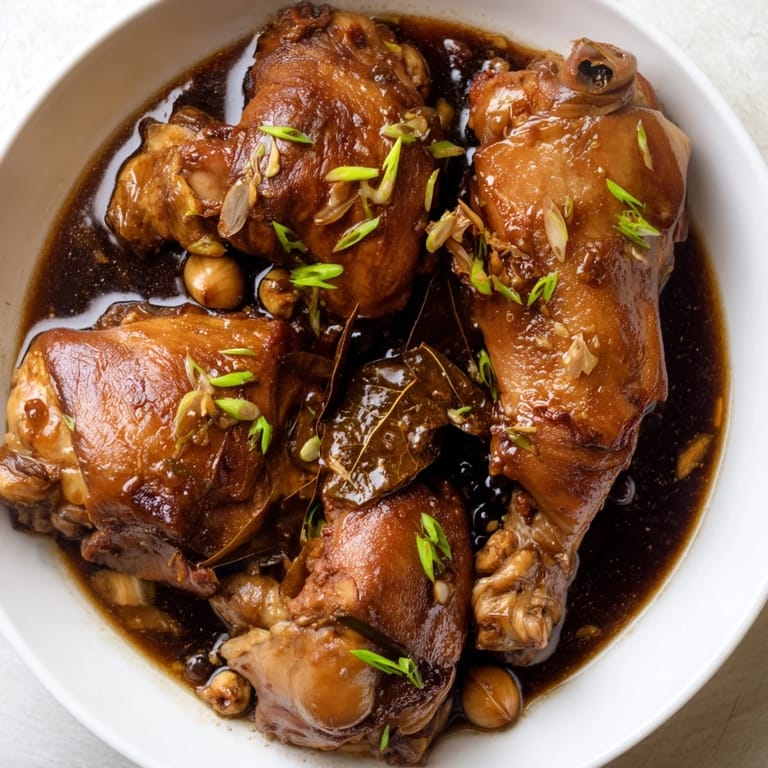
 My lola used to make chicken adobo on Sunday afternoons, filling the kitchen with this intoxicating vinegar-and-garlic aroma that meant family was coming over. I never paid attention to her technique until one day, watching her brown the chicken with such deliberate patience, I realized she wasn't rushing—she was listening to the sizzle, waiting for that exact moment when the skin turned mahogany. Now when I make it, I understand: adobo isn't complicated, but it demands your presence.
I made this for a potluck once, nervous nobody would understand Filipino food, and watched a coworker go back for thirds while barely saying anything—just quiet satisfaction. That moment taught me that great food needs no explanation, only a willingness to taste something unfamiliar.
Ingredients
- Bone-in, skin-on chicken thighs and drumsticks (1.5 lbs): Dark meat stays juicy during the long braise while skin crisps up during browning, giving you textural contrast.
- Soy sauce (1/3 cup): The umami backbone that makes people ask what you put in it, though they can never quite name it.
- Cane vinegar or white vinegar (1/3 cup): The acid that brightens everything and prevents the sauce from tasting one-dimensional—don't skip this balance.
- Garlic cloves (6), smashed: They soften into the sauce and perfume the chicken from the inside out, so smash them gently to release oils without pulverizing.
- Bay leaves (2): They add a subtle background note that deepens after 30 minutes of marinating.
- Whole black peppercorns (1 teaspoon): Toast them slightly in the pan if you want a more pronounced peppery bite.
- Brown sugar (1 tablespoon, optional): A whisper of sweetness that makes the vinegar less aggressive and the savory notes sing.
- Water (1/2 cup): Keeps the sauce from reducing too quickly and burning on the bottom.
- Cooking oil (2 tablespoons): Use something neutral that won't smoke—canola or vegetable oil works perfectly.
- Steamed white rice: The canvas for all that glossy, reduced sauce you've worked to build.
Tired of Takeout? 🥡
Get 10 meals you can make faster than delivery arrives. Seriously.
One email. No spam. Unsubscribe anytime.
Instructions
- Marinate the chicken:
- Combine chicken pieces with soy sauce, vinegar, smashed garlic, bay leaves, peppercorns, and brown sugar in a large bowl. Toss until every piece is coated and glistening. Let it sit in the fridge for at least 30 minutes—this is when flavor starts its slow work.
- Dry and brown:
- Remove chicken from the marinade, patting it dry with paper towels (this helps the skin crisp, not steam). Reserve that liquid—it's about to become your sauce. Heat oil in a large skillet over medium-high heat until it shimmers, then add chicken skin-side down and listen for the sizzle. Let it sit undisturbed for 3–4 minutes until the skin turns deep golden, then flip and brown the other side.
- Braise low and slow:
- Pour in all that reserved marinade plus water, bring to a boil, then drop the heat to low. Cover the pan and let it simmer gently for 25 minutes, turning chicken once so it cooks evenly. You'll smell the transformation happening—that's the vinegar mellowing, the garlic sweetening.
- Reduce and thicken:
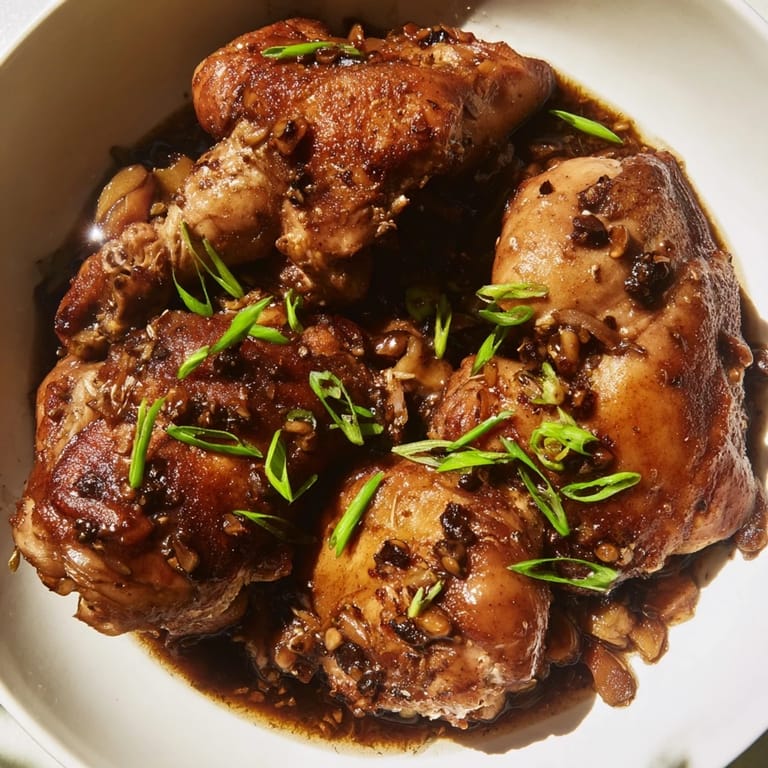
- Uncover the pan and let it simmer for another 10–15 minutes. Watch as the sauce goes from thin and loud to velvety and quiet, coating the back of a spoon. Skim off excess fat if you want, though that fat carries flavor.
- Taste and finish:
- Fish out the bay leaves, taste a bite of sauce, and adjust salt or vinegar if needed. Serve over rice while everything is still steaming.
 Pin it
 My friend's daughter, who claims she doesn't like chicken, asked for seconds and then thirds, and her mother looked at me with this knowing smile. That's when I realized adobo works because it respects the chicken, the vinegar, and the person eating it—nothing hidden, nothing trying too hard.
Why This Sauce Matters
The magic isn't in exotic spices or complicated technique; it's in the conversation between soy and vinegar. Soy brings umami and salt, vinegar brings brightness and edge, and together they create something that tastes both comforting and alive. Add garlic and those bay leaves, and suddenly the sauce tastes like someone's been cooking for hours.
Make It Your Own
I've added a splash of coconut milk when I wanted richness, dropped in dried chilies when I needed heat, and once threw in potatoes to stretch it for a crowd. Adobo is forgiving that way—it bends to what you have and what you need. The foundation stays solid; everything else is negotiable.
What to Serve Beside It
Steamed white rice is the traditional answer and for good reason—it's neutral enough to let adobo be the star while being soft enough to soak up every drop. Some people add chopped scallions or a squeeze of calamansi lime if they have it, and that brightness helps cut through the richness.
- A cold, sharp salad on the side—something vinegary and vegetable-forward—keeps the meal from feeling too heavy.
- Serve leftovers cold the next day and you'll understand why people make extra on purpose.
- This freezes beautifully, so double the batch and save yourself a cooking day later.
 Pin it
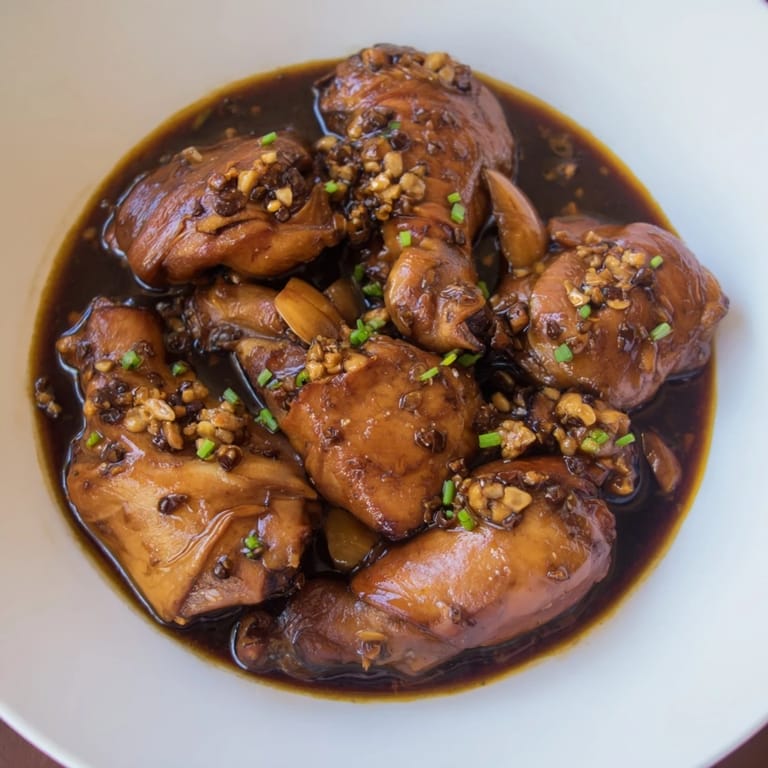
 Adobo is the kind of dish that proves simplicity and intention can accomplish more than any fancy technique. Make it, feed people, and watch how it brings everyone to the table.
Recipe Questions & Answers
- → What cut of chicken works best for this dish?
Bone-in, skin-on chicken thighs and drumsticks are ideal as they stay moist and absorb the flavors well during braising.
- → Can I adjust the tanginess of the sauce?
Yes, varying the amount of vinegar lets you control the tang level. More vinegar creates a sharper bite, while less keeps it milder.
- → What are good serving suggestions for this dish?
Steamed white rice is the classic accompaniment, soaking up the rich and tangy sauce perfectly.
- → How long should the chicken marinate?
Marinating from 30 minutes up to 8 hours helps deepen flavor; longer marination yields more pronounced taste.
- → Can I make variations to the braising liquid?
Yes, adding coconut milk or dried chilies can enrich the sauce with creamy or spicy notes for a different twist.