 Pin it
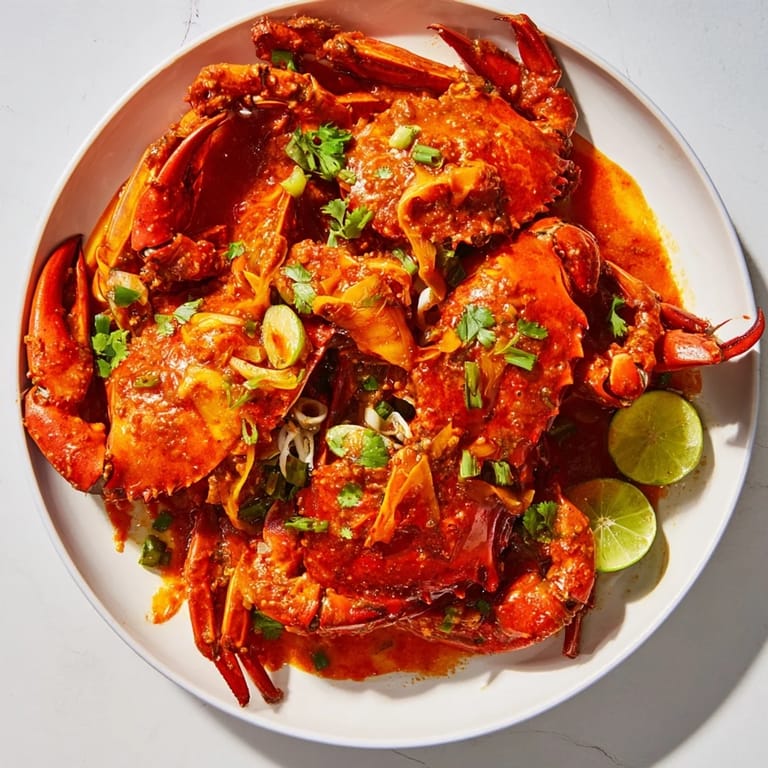
 The first time I ordered chili crab at a hawker stall in Singapore, I watched the cook work with such speed and confidence that I barely caught the individual steps. What struck me most was the moment he cracked an egg into that crimson, bubbling sauce—it transformed into something luxurious, almost silky, and I realized this humble dish had layers I'd never expected. That experience planted a seed, and I spent the next year trying to recreate that magic in my own kitchen, learning that the real secret wasn't in following steps perfectly, but in understanding the dance between the heat, the sauce, and the crab itself.
I remember cooking this for a small dinner party on a humid evening, and the moment my guests heard the sizzle and caught that distinctive aroma of garlic and chili hitting hot oil, they gathered around the stove like moths to flame. One friend asked if this was too complicated for a weeknight meal, and I realized then that the beauty of chili crab is how it looks far more impressive than it actually is—the difficulty is mostly in the confidence of your wrist action and trusting that the sauce will come together.
Ingredients
- 2 whole live mud crabs (about 1.5 kg total), cleaned and cut into pieces: Mud crabs have sweeter, more tender meat than many other varieties, and their size means more sauce-soaked surface area; ask your fishmonger to clean and cut them for you if handling live crabs feels daunting.
- 3 tbsp vegetable oil: Use a neutral oil with a high smoke point so it can handle the wok heat without burning and overpowering the other flavors.
- 1 medium onion, finely chopped: The onion dissolves into the sauce and adds sweetness that balances the heat—don't skip this layer of flavor.
- 5 cloves garlic, minced and 2 cm piece fresh ginger, peeled and minced: These two create the aromatic backbone; mince them finely so they cook evenly and distribute throughout the sauce.
- 3 red chilies and 2 birds eye chilies, deseeded and chopped: Red chilies bring fruity heat while bird's eye chilies pack a sharper bite; start with fewer if you prefer gentler spice and always taste as you go.
- 250 ml tomato ketchup and 2 tbsp chili sauce: This is where the signature flavor comes from—the ketchup adds sweetness and body while chili sauce brings depth; use sambal oelek for a more rustic texture or Sriracha for something smoother.
- 1 tbsp sugar, 1 tbsp soy sauce, and 1 tsp fish sauce: Together these create the savory-sweet-umami trinity that makes the sauce sing; fish sauce might smell strong on its own, but it dissolves into the background and amplifies everything else.
- 250 ml chicken or seafood stock: This thins the sauce to a silky consistency; seafood stock will give you a more pronounced ocean flavor if you can find it.
- 1 tsp cornstarch mixed with 1 tbsp water: This slurry thickens the sauce just enough so it clings to the crab instead of pooling at the bottom of the pan.
- 2 large eggs, lightly beaten: The eggs create delicate ribbons that add richness and help bind the sauce; they're also a visual signal that your dish is restaurant-ready.
- 2 spring onions, sliced and fresh cilantro, chopped: These finish the dish with brightness and color; don't add them until the very end or they'll wilt and lose their punch.
Tired of Takeout? 🥡
Get 10 meals you can make faster than delivery arrives. Seriously.
One email. No spam. Unsubscribe anytime.
Instructions
- Heat your wok and build the flavor foundation:
- Get your wok smoking over medium heat, then add the oil and wait for it to shimmer—this takes about a minute. Add the chopped onion and let it soften for 2 minutes, stirring occasionally so it doesn't brown.
- Layer in the aromatics:
- Once the onion is translucent, add the garlic, ginger, red chilies, and bird's eye chilies all at once. Stir constantly for 2–3 minutes until the kitchen fills with that intoxicating aroma—you'll know it's ready when the mixture is fragrant enough that you can't ignore it.
- Introduce the crab to the heat:
- Toss in your crab pieces and stir-fry for 3–4 minutes, making sure each piece gets coated in the aromatics. Watch as the shells gradually shift from dark to a rusty red—this is the color that tells you they're beginning to cook through.
- Create the signature sauce:
- Pour in the tomato ketchup, chili sauce, sugar, soy sauce, fish sauce, and stock. Stir everything together until the sauce is even—this takes about a minute—and then bring the whole pan to a boil.
- Simmer and cook the crab through:
- Lower the heat and let it simmer uncovered for 10–12 minutes, turning the crab pieces occasionally. The sauce will darken and deepen, clinging to every crevice.
- Thicken the sauce to perfection:
- When the crab is cooked, stir in your cornstarch slurry and watch as the sauce transforms from loose to glossy in about 30 seconds. Taste it now—adjust salt or heat if you need to.
- Add the silky egg ribbons:
- Reduce the heat to low or turn it off, then slowly drizzle the beaten eggs into the bubbling sauce while stirring gently with a fork. The eggs will set into delicate ribbons almost immediately, creating that restaurant magic.
- Finish and serve:
- Scatter the spring onions and cilantro over the top, and serve immediately with lime wedges for squeezing over each bite. Provide plenty of napkins—this dish is meant to be gloriously messy.
 Pin it
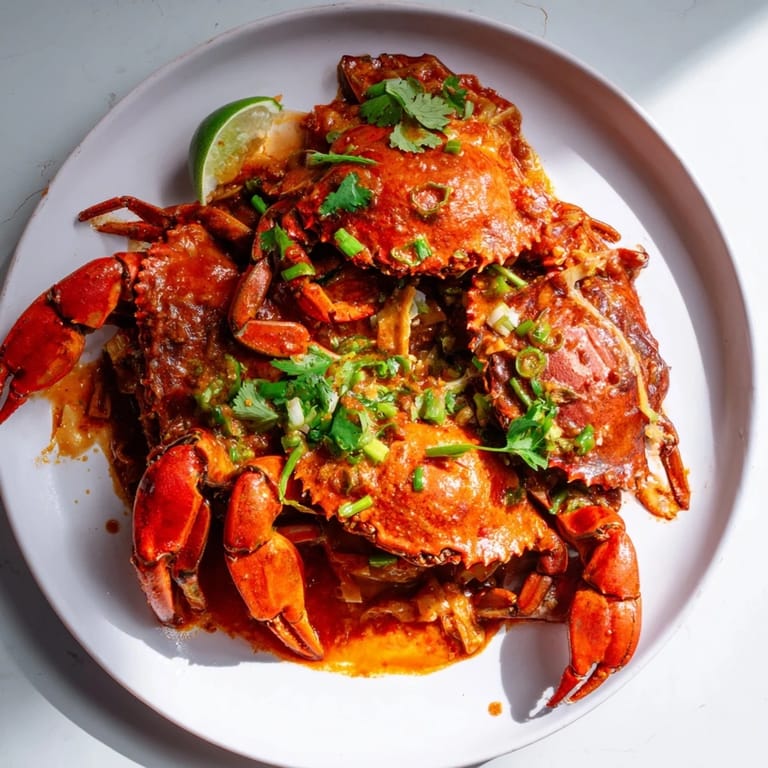
 There's something almost ceremonial about serving chili crab—the way everyone gathers around the table, ties on their bibs, and attacks it with genuine abandon. It stopped being just a recipe for me the moment I realized it's really an excuse to slow down and enjoy food with your hands, with people you care about, without apology.
Choosing Your Crab
Mud crab is the traditional choice for good reason—the meat is sweeter and stays tender even with aggressive stirring in the wok. If mud crab isn't available in your area, blue swimmer crab and Dungeness crab work beautifully; just be aware that they cook slightly faster, so check for doneness at the 8-minute mark. Live crabs will always taste better than frozen, but if frozen is your only option, thaw them completely and pat them dry before cutting.
The Sauce Balance
The magic of this dish lives in the tension between sweet, spicy, and savory. The tomato ketchup brings sweetness and body, the chilies bring heat, and the fish sauce anchors everything in umami. If your first attempt feels too spicy, add more ketchup and sugar next time rather than reducing the chilies—this keeps the flavor profile intact while softening the edge. If it tastes flat, a splash more fish sauce is usually the answer.
What to Serve Alongside
Steamed mantou buns are traditional and perfect for soaking up every drop of sauce, but this dish is equally spectacular with jasmine rice, which provides a neutral backdrop for the bold flavors. Some people prefer a simple stir-fried vegetable on the side—bok choy or gai lan work well—to add freshness without competing with the crab. And always, always have lime wedges on the table; a squeeze of fresh lime over each bite lifts the entire experience.
- Keep napkins within arm's reach; this is a two-fisted eating experience and there's no shame in that.
- Prepare a small bowl of water with lemon for rinsing your fingers between bites, or resign yourself to smelling like chili crab for the rest of the evening.
- Make extra sauce—people will want to continue eating even after the crab is gone.
 Pin it
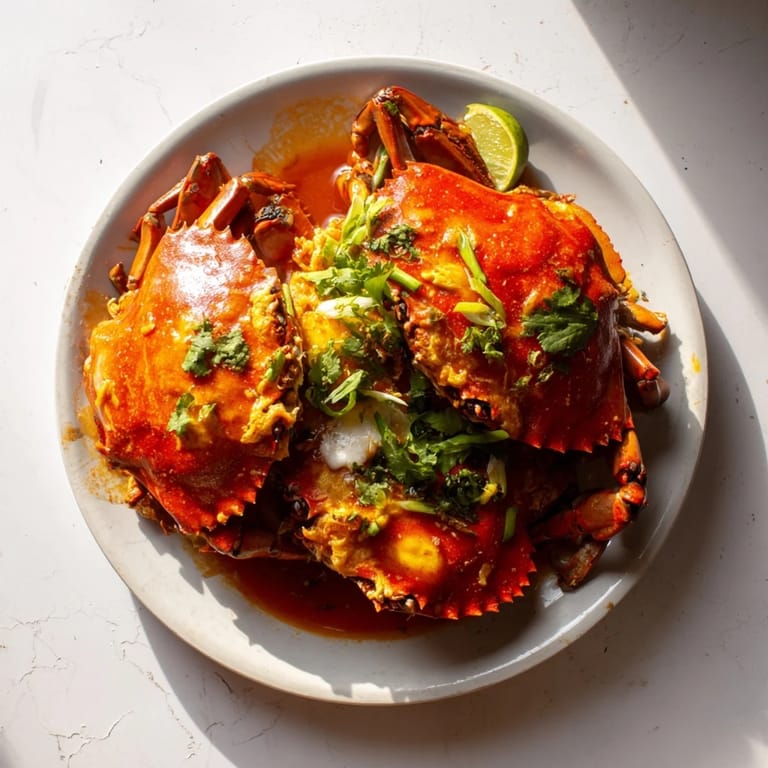
 Every time I make this, I'm reminded why chili crab earned its place at Singaporean tables and in the hearts of anyone who's ever tasted it. It's messy, it's loud, and it brings people together in the most unpretentious way possible.
Recipe Questions & Answers
- → What type of crab is best for this dish?
Fresh live mud crabs are ideal, but blue swimmer or Dungeness crabs can be good alternatives.
- → How do I adjust the spiciness level?
Modify the number of birds eye chilies to suit your heat preference, adding more for extra kick.
- → What can I serve alongside this dish?
Steamed mantou buns or plain rice work great to balance the bold sauce flavors.
- → Why are eggs added to the sauce?
Beaten eggs stirred into the hot sauce create smooth, silky ribbons enhancing texture and richness.
- → Are there common allergens in this dish?
It contains shellfish, eggs, soy, and fish. Always double-check sauces for hidden allergens.