 Pin it
 The first time I made laksa, I was standing in my kitchen on a rainy afternoon, phone propped up against a cookbook, trying to decode the unfamiliar spice paste at the bottom of my shopping bag. My neighbor had just returned from Malaysia and left me with a small container of laksa paste and strict instructions: don't overthink it, just let the broth breathe. That single batch changed how I cook curry—the way the coconut milk and spices meld into something that tastes like warmth and complexity in a bowl.
I remember serving this to friends who were skeptical about vegetarian laksa—they'd only had the prawn version before. Watching them taste the creamy, aromatic broth and then dig into the silky tofu cubes, their faces lit up. One of them asked if I'd been holding out on them this whole time, and we laughed because suddenly laksa became the dish we made whenever we needed something that felt both comforting and special.
Ingredients
- Vegetable oil: Neutral and high-heat tolerant; use about 2 tablespoons to gently coax out the aromatics without burning them.
- Onion, garlic, ginger, and lemongrass: These four create the flavor foundation; don't skip the lemongrass because it gives laksa its signature brightness and keeps the broth from tasting one-dimensional.
- Laksa paste: This is your shortcut to authentic flavor; store-bought works beautifully and saves you hours of grinding spices.
- Coconut milk: Full-fat is non-negotiable here; it creates that silky mouthfeel that makes the dish memorable.
- Vegetable broth: Use good quality if you can; it's the base that carries all those fragrant spices.
- Soy sauce and sugar: These balance the richness with umami depth and a touch of sweetness that doesn't taste sugary.
- Rice noodles: Thick or vermicelli both work; soak rather than boil them if you want them tender without getting mushy.
- Firm tofu: Pressing it for 10 minutes before frying makes all the difference in how crispy it becomes.
- Fresh vegetables: The carrot, bell pepper, snow peas, and bean sprouts provide texture and color; they're not just garnish, they're essential to the eating experience.
- Spring onions, cilantro, and lime: These finish the dish with freshness; don't skip them because they cut through the richness beautifully.
Tired of Takeout? 🥡
Get 10 meals you can make faster than delivery arrives. Seriously.
One email. No spam. Unsubscribe anytime.
Instructions
- Build the fragrant base:
- Heat oil in your pot and add the onion, garlic, ginger, and lemongrass. You'll know it's ready when your kitchen smells incredible and the onions have softened into translucence, usually 3 to 4 minutes. This slow, gentle start is what sets the tone for the entire broth.
- Toast the laksa paste:
- Stir it in and let it cook for 2 minutes; this deepens its flavor and prevents it from tasting raw or chalky in the finished soup. You want to hear a gentle sizzle and smell that concentrated spice bloom.
- Create the creamy broth:
- Pour in the coconut milk and vegetable broth, stirring constantly to make sure the paste dissolves evenly rather than clumping. Bring it to a simmer and let it bubble gently uncovered for 10 minutes so the flavors have time to get to know each other.
- Season to taste:
- Add soy sauce, sugar, and salt; taste as you go because every laksa paste brand is different. You're looking for a balance between spicy, creamy, salty, and just a whisper of sweetness.
- Prepare the noodles and tofu:
- While the broth is simmering, get your rice noodles ready according to package instructions and fry your tofu cubes in a separate skillet until they're golden and slightly crispy on the edges. This tofu becomes little pockets of soft richness in every spoonful.
- Add the final vegetables:
- Toss the carrots, bell pepper, and snow peas into the simmering broth for 3 to 4 minutes; they should still have a bit of snap when you bite into them. This is where you're adding brightness and texture to balance the creamy broth.
- Assemble with intention:
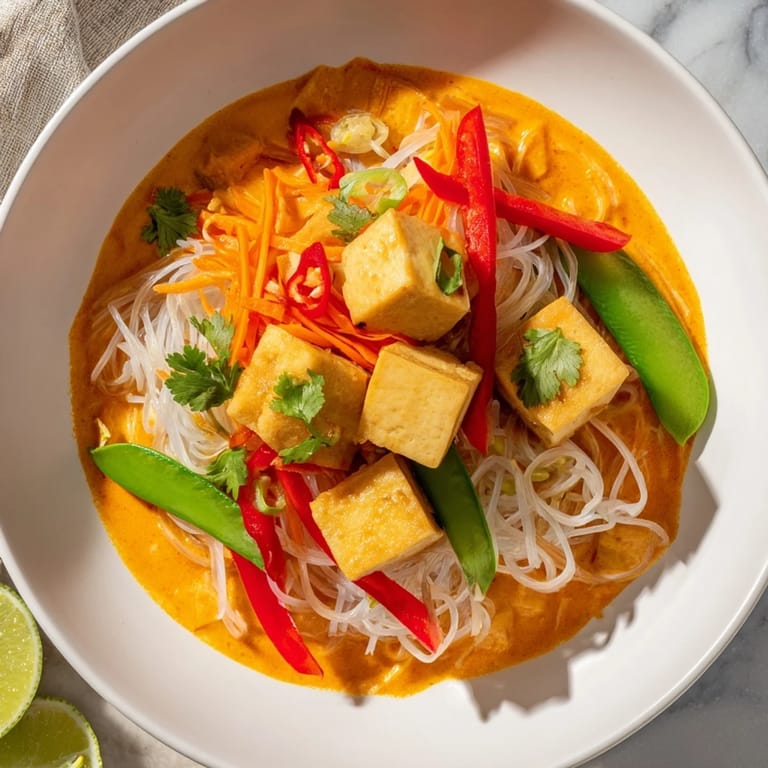
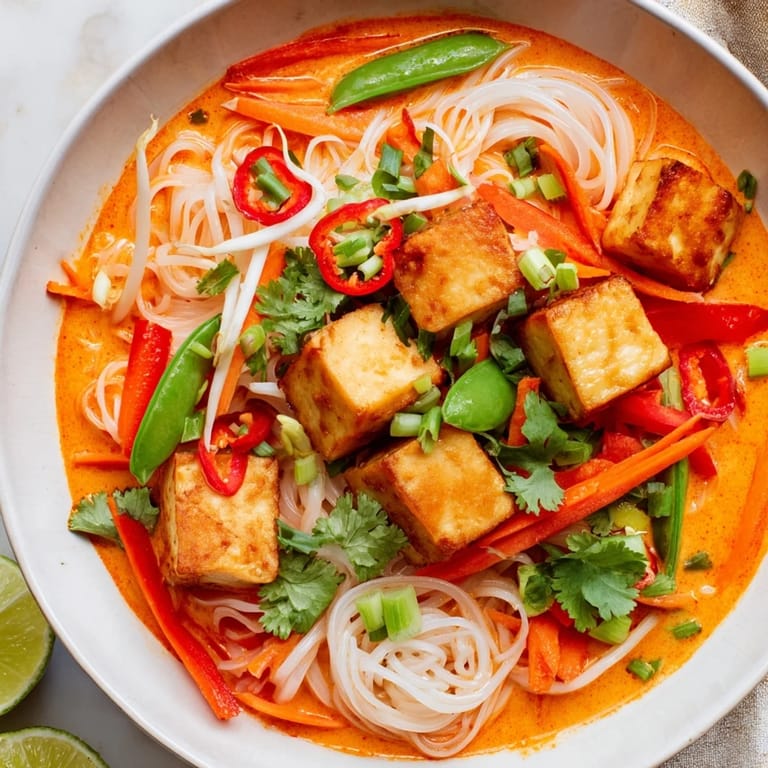
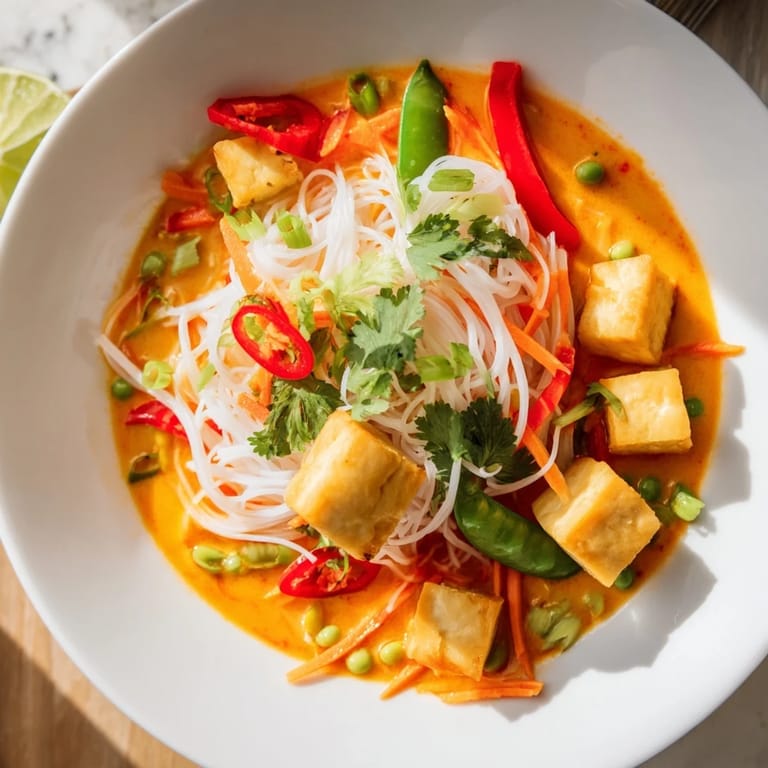
- Divide the noodles into bowls, then ladle the hot broth and vegetables over top. Crown each bowl with fried tofu, bean sprouts, spring onions, cilantro, and chili if you like heat, then serve with lime wedges on the side so everyone can squeeze as much or as little as they want.
 Pin it
 There's a moment late in cooking when you step back and really smell what you've created—that's when laksa stops being a recipe and becomes something that connects you to a place you may never have been. That's the moment I keep making it for.
Why Fresh Ingredients Matter
The cilantro and lime are not optional finishes; they're the difference between a good laksa and one that tastes alive. I learned this when I once tried to make it without either, thinking I was ahead by not having to chop garnishes. The broth tasted flat and heavy, and I spent the second half of dinner kicking myself. Fresh herbs and citrus cut through richness in a way that nothing else can, so treat them as part of the recipe, not an afterthought.
Building Flavor Layers
Laksa is a lesson in patience and aromatics. Each step—toasting the paste, simmering the broth, frying the tofu—layers in different kinds of flavor and texture. When you rush it or skip steps, you lose those layers. I've made it both ways, and the slow version always tastes like someone cared enough to get it right.
Make It Your Own
The beauty of this recipe is that it's a framework, not a prison. I've added mushrooms when I had them, thrown in bok choy for extra greens, and even stirred in a handful of edamame because they were sitting in my freezer. The core—the broth, the tofu, the noodles—is what makes it laksa; everything else is your kitchen talking.
- Try adding mushrooms or baby corn for earthiness and more substance.
- If you eat eggs, a soft-boiled halved egg in each bowl makes it feel like a complete meal and adds richness.
- Taste the broth before adding vegetables because that's your last chance to adjust the spice level without it being diluted.
 Pin it
 Laksa is the kind of dish that tastes complicated but teaches you that good cooking is really just about respecting your ingredients and giving them time. Make this when you want to feel like you're traveling through flavor.
Recipe Questions & Answers
- → What type of noodles work best in this dish?
Thick rice noodles or vermicelli both pair well, softened or cooked according to package instructions, for an authentic texture.
- → Can I make the broth spicier?
Yes, adding extra laksa paste or fresh chili slices enhances the heat while preserving the balanced coconut creaminess.
- → How should tofu be prepared for this dish?
Firm tofu is lightly fried until golden on all sides to add texture and prevent it from falling apart in the broth.
- → Are there suitable vegetable substitutes?
Mushrooms, baby corn, or bok choy can be added for variety and additional texture without overpowering the broth.
- → What garnishes complement the flavors here?
Fresh cilantro, spring onions, bean sprouts, and a squeeze of lime add brightness and fresh contrast to the rich broth.
- → Is this dish suitable for a vegan diet?
Yes, provided the laksa paste contains no shrimp paste or fish sauce, this preparation is fully plant-based and satisfying.