 Pin it
 I'll never forget the spring afternoon when a friend brought over a platter so visually stunning that we actually paused before eating it. The pinks and pale reds blended together like someone had taken watercolor paints directly to food, and I realized in that moment that the most memorable meals aren't always about complexity—sometimes they're about creating something beautiful that invites people to slow down and really see what's in front of them. That's when I became obsessed with building this Pink Petal Watercolor Wash platter.
I made this for my sister's brunch last spring, and what struck me most wasn't just how beautiful it looked on the table—it was watching my normally rushed guests actually put their phones down and linger over their plates, arranging little combinations of prosciutto rose, creamy cheese, and a perfect strawberry. Food doesn't always have to feed just the body; sometimes its real magic is in making people want to stay a little longer.
Ingredients
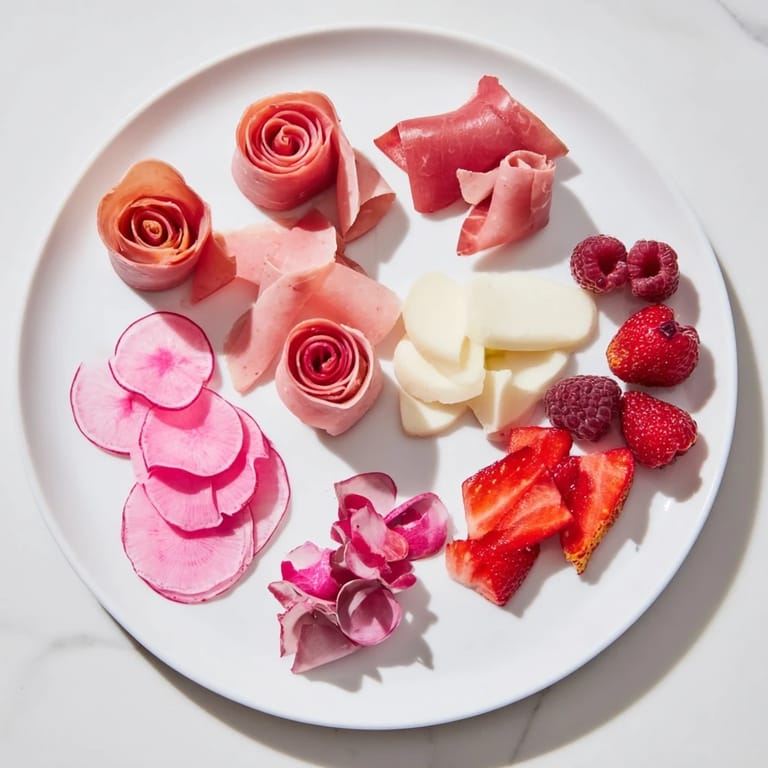
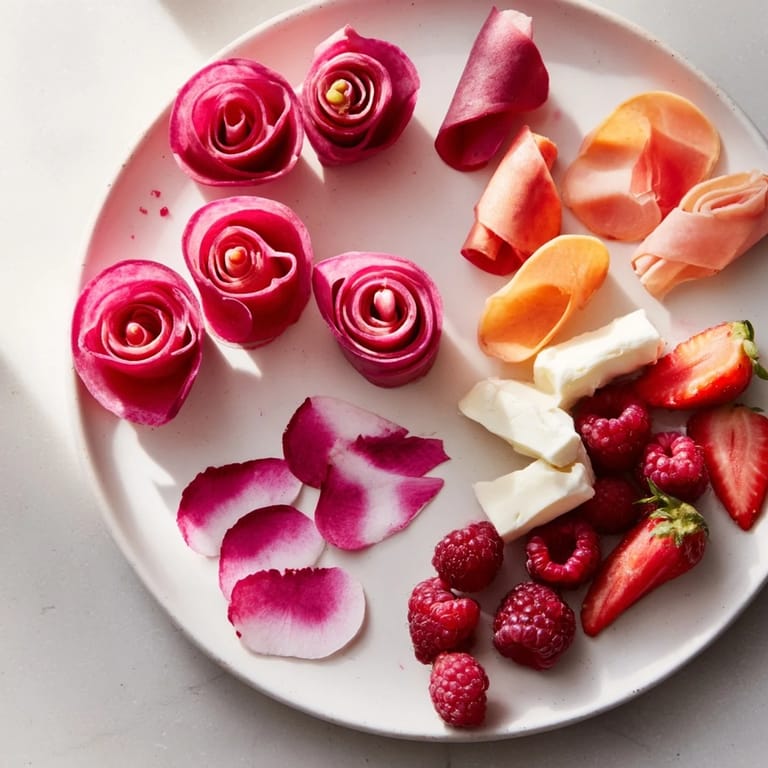
- Prosciutto, 100 g, thinly sliced: The delicate, salty backbone of this platter. Slice it paper-thin and shape each piece into a rose by gently rolling or folding—it's easier than it sounds and transforms the whole visual presentation. Quality matters here more than quantity.
- Mortadella, 100 g, thinly sliced: A softer, subtly spiced cousin to prosciutto that adds depth without overwhelming. Let it fall into loose, natural folds rather than forcing it into rigid shapes.
- Pink radishes, 6–8 small, thinly sliced: These are your bright, peppery accent notes. A mandoline slicer makes this effortless, but a sharp knife works beautifully too if you take your time.
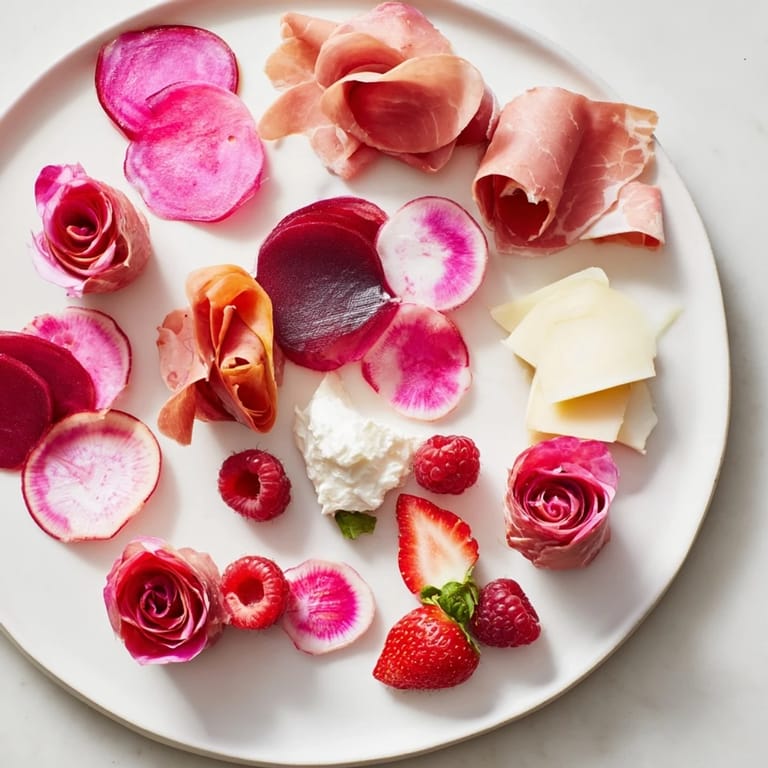
- Watermelon radish, 1, thinly sliced: The star of the show—those pale pink and white concentric circles are natural watercolor brushstrokes. Slice it last to prevent browning.
- Beet, 1 small, cooked and thinly sliced: Deep burgundy slices that ground the palette. I roast or boil mine ahead and keep it separate until the last moment so it doesn't stain everything pink.
- Pink-hued cheese (port wine Derby, rosé goat cheese, or berry-washed rind), 100 g, sliced: This is where personality enters. Choose something that makes you smile when you see it. The color is the point here as much as the taste.
- Brie or camembert, 100 g, cut into wedges: Creamy, forgiving, and acts as a visual softener between the bolder colors. Cut into generous wedges that invite people to actually eat them.
- Baguette, 1 small, sliced: Or gluten-free crackers if that's your crew. Slice at an angle for elegance, not straight down.
- Rice crackers, 1 package: A lighter, airier textural contrast that doesn't compete for attention.
- Strawberries, 1 cup, halved: Don't slice them too thin—they should feel generous and whole. The sweetness is your finishing note.
- Raspberries, 1 cup: Delicate and tart, these cluster beautifully and give the eye places to rest.
- Edible rose petals or microgreens (optional): If you use these, add them at the very last second before serving. They wilt fast, but they're worth it for that final flourish.
Tired of Takeout? 🥡
Get 10 meals you can make faster than delivery arrives. Seriously.
One email. No spam. Unsubscribe anytime.
Instructions
- Create Your Canvas:
- Start with a large platter or board as your base. I use whatever I have—a cutting board, a wide ceramic platter, even a wooden serving board. The size matters less than having enough space to spread and layer without crowding.
- Shape and Place the Prosciutto Roses:
- Take a slice of prosciutto and gently roll it into a loose rose shape, or fold it accordion-style and let it naturally cascade. Place these in small clusters across the platter, spacing them so you can build around them. Don't stress about perfection—slightly imperfect roses actually look more organic and beautiful.
- Lay Down the Mortadella:
- Beside and between the prosciutto, arrange mortadella slices in soft, loose folds. Let them overlap slightly and fall naturally rather than lying them flat and rigid. This creates visual texture and depth.
- Create the Watercolor Vegetable Layers:
- Now the fun part. Arrange your radish slices, watermelon radish slices, and beet slices in overlapping, slightly fanned patterns. Think of watercolor paint bleeding into adjacent colors—they should touch and blend visually but each variety should have its own little territory. This is where the whole concept comes alive.
- Cluster the Cheeses:
- Place your pink cheese slices and brie wedges in small groups, letting them sit naturally beside the vegetables and meats. The creamier cheeses will fill visual gaps and offer color contrast. Don't arrange them too mathematically.
- Add Bread and Crackers:
- Arrange baguette slices and rice crackers in gentle curves along one edge or scattered throughout, depending on your platter shape. They're functional but also visual elements—let them guide the eye around the board.
- Scatter the Berries:
- Add strawberry halves and raspberries in small piles. These provide brightness, sweetness, and little resting places for the eye. Don't spread them too thin—let some clusters feel a bit abundant.
- The Final Touch:
- If using edible rose petals or microgreens, add them just before serving. Step back and look at the whole thing. If something feels empty, add more of it. If something feels crowded, gently redistribute. Trust your instincts.
- Serve with Intention:
- Bring it to the table and let people know they should mix and match flavors. Some will want prosciutto-and-brie, others will go for strawberry-and-cheese. The whole point is creating a landscape of choices.
 Pin it
 There's a moment that happens every time I make this platter—right when I step back and see all the colors coming together, and I suddenly understand why people talk about food as art. It's not pretentious; it's real. Someone always says something like, 'I don't even want to eat this,' and then fifteen minutes later, everyone's made their own perfect bite and there's nothing left but crumbs and happy silence.
Building Your Color Story
The magic of this platter lives in restraint and intentionality. Everything here is pink or pale red by design—there are no random greens or yellows fighting for attention. This constraint is actually liberating because it forces you to think about shape, texture, and arrangement instead of relying on bold color contrast. When you sit down to build this, think of it less as cooking and more as storytelling with food. Each element should feel like it belongs in conversation with the others.
Personalizing for Your People
One of the best things about this platter is how naturally it adapts. For vegetarian guests, simply skip the meats and add more cheese varieties—a nice sharp cheddar, some goat cheese, maybe a peppery farmhouse cheese. For gluten-free friends, crackers swap in seamlessly. For someone who doesn't eat cheese, the vegetable and fruit sections actually shine on their own. I've made versions with pickled onions for tang, with pink peppercorns for gentle heat, and once even with candied beets for extra sweetness. The structure stays the same; you're just coloring inside the lines differently.
Pairing and Serving Thoughts
I've learned that how you serve this matters almost as much as what you put on it. If you're doing brunch, a chilled rosé wine is the obvious choice—something crisp and slightly sweet that echoes the berry flavors. For afternoon gathering or aperitivo hour, a light sparkling wine works beautifully. Even just sparkling water with fresh mint lets the food be the star. The rhythm of eating this platter is slower than usual—people naturally graze, combine flavors, and linger. Don't rush it.
- A fresh goat cheese with herbs adds tang that balances the sweetness of the berries
- If your platter feels empty anywhere, fresh mint leaves or baby arugula can fill space without breaking the color palette
- Make this platter no more than 3 hours before serving to keep everything at peak freshness and crispness
 Pin it
 This platter taught me that hospitality isn't about complexity or spending hours in the kitchen—it's about showing people they're worth the thoughtfulness, even if that thoughtfulness takes only twenty minutes. Every time I make it, I'm reminded that the simplest things, arranged with intention, become the most memorable.
Recipe Questions & Answers
- → How do I shape prosciutto into roses?
Roll or fold thin prosciutto slices gently to form rose-like shapes before arranging them on the platter.
- → Which cheeses work best for this pink-themed platter?
Choose pink-hued cheeses like port wine Derby, rosé goat cheese, or berry-washed rind cheeses, combined with creamy brie or camembert.
- → Can I substitute the bread for a gluten-free option?
Yes, gluten-free crackers or sliced baguettes made from gluten-free bread can be used instead.
- → What vegetables contribute to the watercolor effect?
Thin slices of pink radishes, watermelon radish, and cooked beets layered softly mimic a watercolor palette.
- → Are there suggested garnishes for an extra elegant touch?
Edible rose petals or microgreens add delicate color and sophistication to the platter presentation.
- → Is this platter suitable for vegetarian diets?
Omit the cured meats and increase cheese and vegetable varieties to create a vegetarian-friendly version.