 Pin it
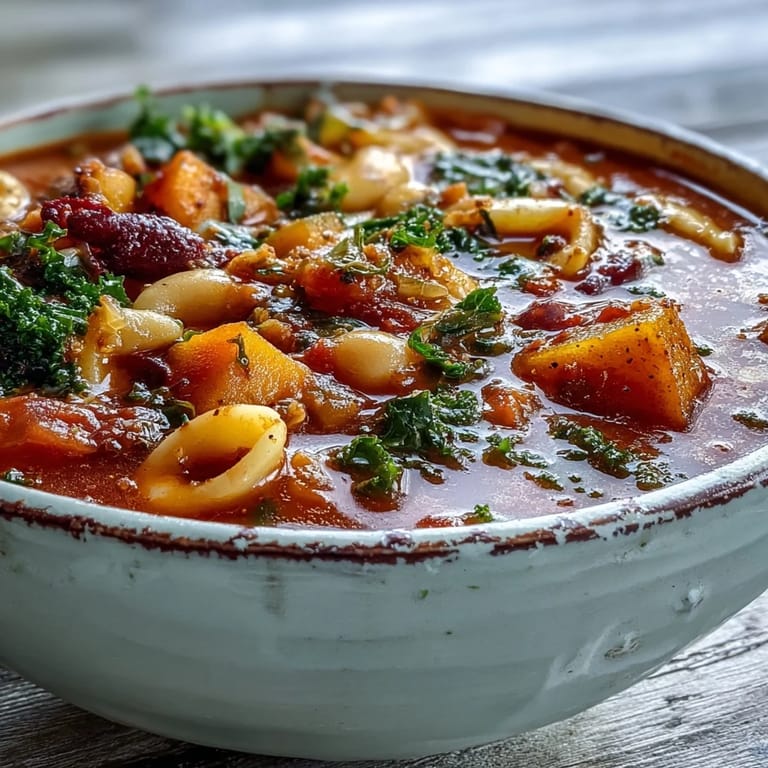
 My neighbor knocked on the door last February with snow still clinging to her boots, carrying a mason jar of homemade minestrone that filled the whole kitchen with warmth before I even opened the lid. She'd made it that morning while watching the weather reports get grimmer, and something about the way she described ladling it into bowls—how the pasta had softened into the broth, how the kale turned silky—made me determined to recreate it. That first spoonful taught me that real comfort food doesn't announce itself; it just settles into you like a hug you didn't know you needed.
I made this for my book club on a Tuesday night when the heating in my house decided to quit, and honestly, that soup might have saved the evening. Everyone showed up bundled in layers, and by the time we finished our first bowls, people were actually relaxing into their chairs instead of huddling. One friend asked for the recipe right then, mid-conversation, which felt like the highest compliment possible.
Ingredients
- Olive oil: Use a good quality one if you have it—this isn't just cooking fat, it's flavor, and you'll taste it in the first sip.
- Yellow onion, carrots, and celery: The holy trinity that builds the foundation; don't rush this step, as their sweetness caramelizing slightly makes everything better.
- Garlic cloves: Mince them small so they dissolve into the broth rather than staying as distinct pieces.
- Butternut squash: Cut it into roughly half-inch cubes so they soften but don't turn to mush—you want tender texture, not soup sludge.
- Zucchini: A summer vegetable in a winter soup, but it adds body and a subtle sweetness that balances the earthy kale.
- Diced tomatoes: Canned is perfect here; they're picked at peak ripeness and save you the work of fresh ones.
- Kale: Strip the leaves from the stems ruthlessly—those stems are tough and woody, but the leaves will become almost buttery when simmered.
- Cannellini beans: These white beans are creamy and mild, letting other flavors shine while adding substance and protein.
- Small pasta: Ditalini or elbow macaroni works best; larger pasta gets lost, and tiny pasta cooks at the soup's pace instead of against it.
- Vegetable broth: This is your liquid gold; use homemade if you have it, but good store-bought broth is honest work too.
- Bay leaf, oregano, thyme, and rosemary: These dried herbs are the backbone of Italian flavor, warming and slightly peppery in combination.
Tired of Takeout? 🥡
Get 10 meals you can make faster than delivery arrives. Seriously.
One email. No spam. Unsubscribe anytime.
Instructions
- Build your base with the soffritto:
- Heat the olive oil in your largest pot over medium heat, then add the diced onion, carrots, and celery. Listen for the gentle sizzle and let them soften for five minutes, stirring occasionally so the oil coats everything evenly. You're not trying to brown them hard; you want them to turn translucent and start releasing their natural sweetness into the pot.
- Wake it up with garlic:
- Add the minced garlic and stir constantly for just one minute until your kitchen smells like someone opened a Italian grandmother's spice cabinet. Don't let it brown—that bitter burned taste will linger through the whole soup.
- Layer in the squash and zucchini:
- Toss in those butternut squash cubes and diced zucchini, stirring for another five minutes so they get coated and start to soften slightly at the edges. The heat should still be medium, patient and steady.
- Add the tomatoes and broth:
- Pour in the canned tomatoes with their juices and the full six cups of vegetable broth, then add the bay leaf, oregano, thyme, and rosemary. Stir well and bring it all to a boil, watching for the surface to start rolling with bubbles.
- Let it simmer gently:
- Once it's boiling, reduce the heat to a simmer and cover the pot partially with a lid. Let it bubble quietly for about fifteen minutes, stirring occasionally, until the squash is tender when you poke it with a fork but hasn't fallen apart completely.
- Add the beans, pasta, and kale:
- Stir in the drained cannellini beans, the small pasta, and those chopped kale leaves (don't worry if they seem like an enormous mountain of green at first—they collapse dramatically as they cook). Simmer uncovered for ten to twelve minutes, stirring every couple of minutes so the pasta doesn't stick to the bottom, until the pasta is soft and the kale has turned from bright green to a darker, more refined shade.
- Finish and season:
- Fish out and discard the bay leaf, then taste a spoonful. Add salt and pepper until it tastes like comfort, remembering that seasoning is personal and your palate is the final judge.
- Serve with generosity:
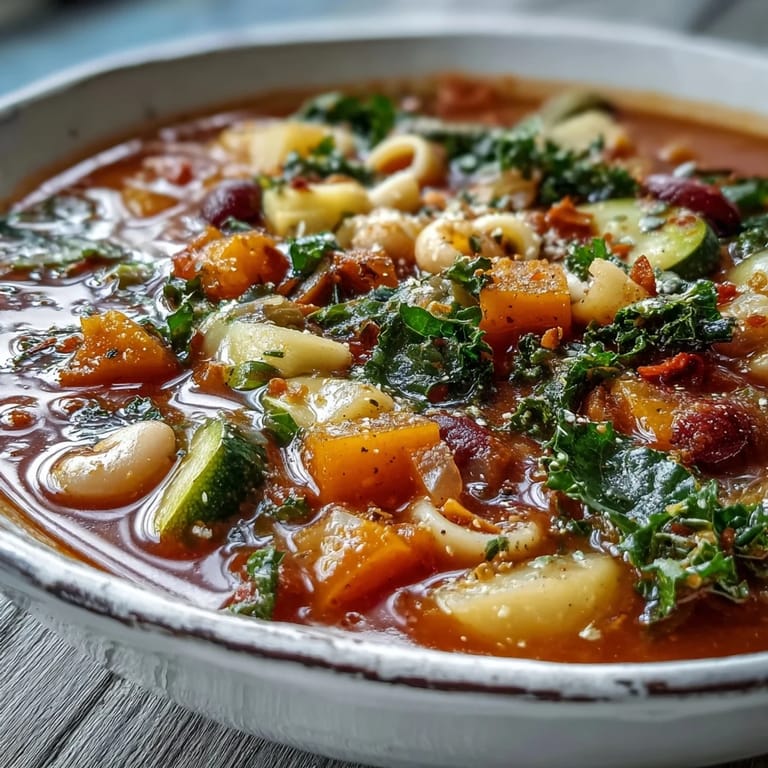
- Ladle the soup into bowls, and if you want, grate fresh Parmesan over the top and scatter chopped parsley across as if you're painting something beautiful. Serve alongside crusty bread for soaking up every drop.
 Pin it
 There's a particular quiet that falls over a dinner table when everyone's eating soup on a cold evening—less conversation, more contentment. My dad once said minestrone was the soup that proved you didn't need meat or cream to make something feel luxurious, and after years of making this version, I finally understand what he meant.
Variations to Keep Things Interesting
Winter vegetables shift with the season, so let your farmers market guide you. I've made this with diced celery root instead of regular celery, with roasted beets folded in at the end for earthiness, with spinach substituted for kale on nights when I wanted something milder. Even swapping the herbs slightly—using Italian seasoning instead of individual dried herbs, or adding a pinch of red pepper flakes for warmth—keeps the soup feeling fresh even if you make it every week.
Making It Your Own Without the Fuss
The architecture of this soup is flexible enough that you can practically throw in whatever vegetables need using. Run out of zucchini and have parsnips instead? Perfect. Only have half a can of tomatoes? Add more broth. This isn't a recipe that demands precision; it asks only that you taste as you go and trust your instincts about what your soup needs. That flexibility is part of why I love making it—there's no way to fail, only ways to discover what you prefer.
Storage, Reheating, and Planning Ahead
This soup actually gets better on day two as the flavors meld together overnight in the refrigerator, so don't hesitate to make a double batch. It keeps for about four days in an airtight container, and it freezes beautifully for up to three months if you skip the pasta and add it fresh when reheating. On mornings when you need something quick and grounding, there's nothing quite like ladling out a frozen portion, reheating it slowly, and tasting summer vegetables in the middle of February.
- If you're freezing it, leave the pasta out entirely and cook it fresh when you reheat the soup.
- Thaw overnight in the refrigerator rather than at room temperature for the safest, slowest warming.
- A splash of fresh lemon juice stirred in at the very end brightens everything and makes people ask what your secret ingredient is.
 Pin it
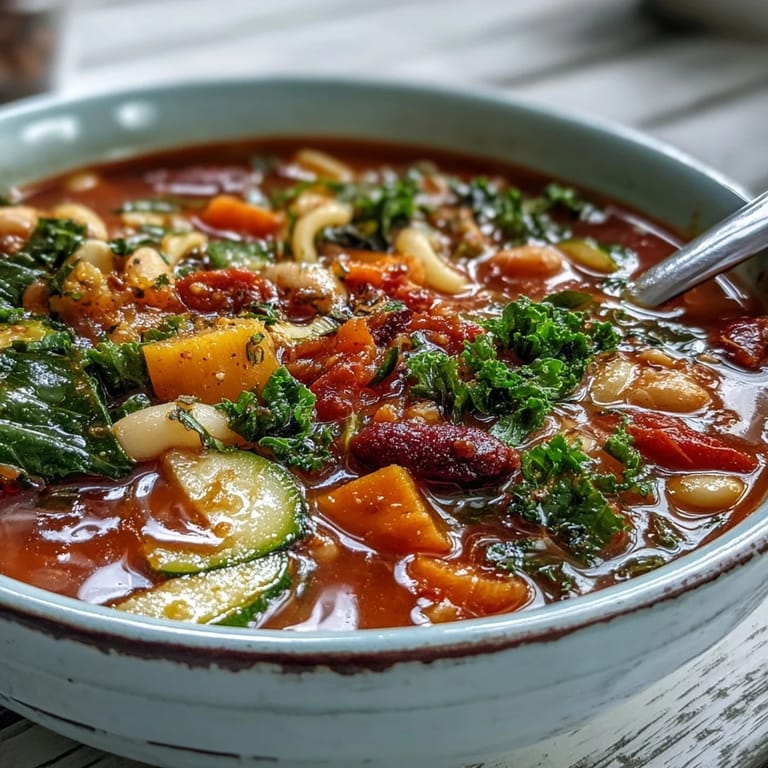
 This soup is the kind you make for yourself on hard mornings and for others on nights when they need reminding that someone cares. It's honest food that never tries too hard, which somehow makes it the most comforting thing of all.
Recipe Questions & Answers
- → Can I make this gluten-free?
Yes, simply replace the pasta with gluten-free varieties like rice-based ditalini, or add extra beans instead of pasta for a grain-free version.
- → How long does this keep in the refrigerator?
Stored in an airtight container, this soup keeps well for 4-5 days. The pasta will absorb more liquid over time, so you may need to add extra broth when reheating.
- → Can I freeze this soup?
For best results, freeze without the pasta. Cook pasta fresh when reheating. The soup base freezes beautifully for up to 3 months.
- → What pasta works best?
Small shapes like ditalini, elbow macaroni, or shells are ideal. They cook evenly and fit perfectly on a spoon with the vegetables and beans.
- → Can I use dried beans instead of canned?
Absolutely. Cook about 1 cup dried beans until tender, then drain and add in step 6. You may need to adjust the cooking time slightly.