 Pin it
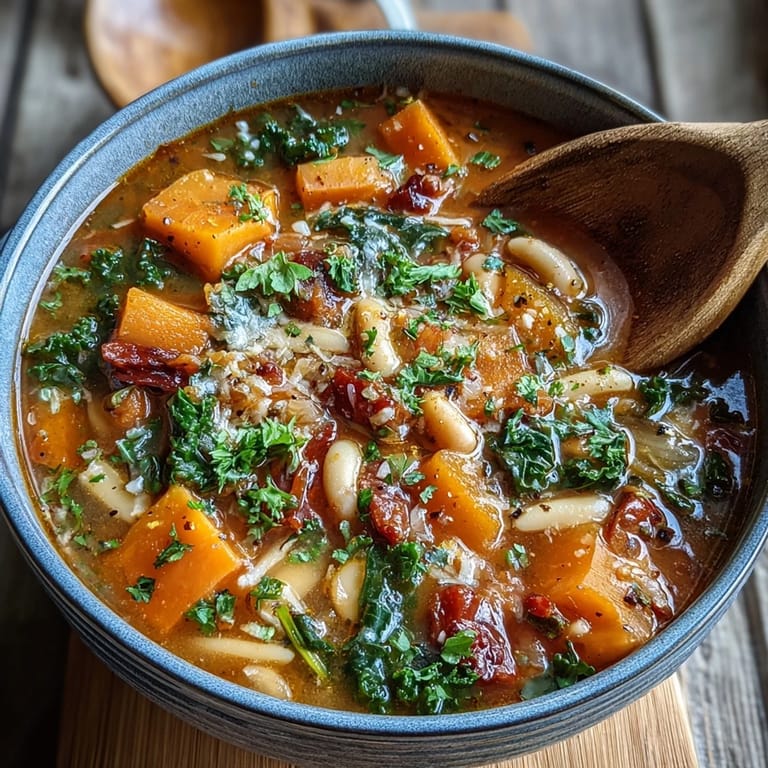
 There's something about the way butternut squash caramelizes at the bottom of the pot that made me fall for this soup on a gray November afternoon. My neighbor had dropped off an armful of kale from her garden, and I had half a butternut squash sitting on my counter that needed rescuing. I threw together what I thought would be a simple vegetable broth, but those sweet squash pieces and earthy kale transformed it into something I found myself craving for weeks afterward. This minestrone became my go-to when the weather turned cold and my kitchen needed to smell like comfort.
I made this for my sister when she called saying she'd caught a cold, and she told me later that just walking into my kitchen and smelling the herbs and tomatoes made her feel better before she'd even tasted a spoonful. We sat at the counter with steaming bowls, and she added so much Parmesan that it practically became a vegetable itself. That afternoon taught me that soup is one of the few dishes that feels like an act of care, especially when someone needs it.
Ingredients
- Olive oil: Use a good quality oil you actually enjoy tasting, because it's the foundation that brings out the sweetness of the aromatics and carries the herb flavors throughout.
- Yellow onion, carrots, and celery: This holy trio (the soffritto base) builds the soup's backbone, so don't rush the sautéing step or skip any of them.
- Garlic cloves: Mince them fine so they distribute evenly and release their perfumy oils into the oil, rather than leaving big chunks that taste harsh.
- Butternut squash: Cut it into roughly half-inch cubes so it softens completely but doesn't disappear into mush by the end.
- Zucchini: Adds a light freshness that keeps the soup from feeling too heavy, and it cooks quickly so you don't have to worry about it falling apart.
- Fresh kale: Strip the leaves from the tough center ribs before chopping, or you'll end up with chewy bits that don't belong in soup.
- Canned diced tomatoes: The acidity brightens everything, so don't skip the juices that come with them.
- Cannellini beans: They're mild and creamy, which means they absorb the broth flavors rather than compete with them.
- Small pasta: Ditalini works beautifully, but broken spaghetti or elbow macaroni are equally good options.
- Vegetable broth: This is where you can elevate the whole pot, so use broth you'd actually drink on its own if possible.
- Dried oregano, thyme, and rosemary: These three dried herbs create an Italian foundation that feels warm and familiar without being overpowering.
- Red pepper flakes: Keep these optional unless you want a subtle heat that builds as you eat, which I often do.
- Fresh parsley: Stirred in at the very end, it adds brightness that you didn't know the soup needed until you taste it.
- Parmesan cheese: Grated fresh over the top, it melts into the warm soup and adds a salty, umami depth.
Tired of Takeout? 🥡
Get 10 meals you can make faster than delivery arrives. Seriously.
One email. No spam. Unsubscribe anytime.
Instructions
- Build the flavor foundation:
- Heat your olive oil in a large pot over medium heat and add the diced onion, carrots, and celery. Let them cook for five to six minutes, stirring occasionally, until they start to soften and the kitchen fills with that sweet, warm smell that signals everything is going right. You'll notice the onion becomes translucent and the carrots start to look glossy.
- Wake up the garlic:
- Stir in your minced garlic and let it cook for just one minute until it's fragrant but not browning. The moment it stops smelling sharp and starts smelling almost floral, you're done.
- Introduce the squash:
- Add your butternut squash cubes and the zucchini, stirring them into the oil so they get coated and start to caramelize slightly on the edges. After four to five minutes, you'll notice the squash beginning to soften and the pot smelling sweeter.
- Create the broth:
- Pour in your canned tomatoes with all their juices, the vegetable broth, and water, then bring everything to a boil. You'll see the surface begin to bubble vigorously, which is your signal to move to the next step.
- Layer in the herbs and spices:
- Sprinkle in the oregano, thyme, rosemary, and red pepper flakes if you're using them, then reduce the heat to a gentle simmer. Let the soup bubble quietly, uncovered, for fifteen minutes so the flavors can meld and the squash continues softening.
- Add the beans and pasta:
- Stir in the drained cannellini beans and your small pasta, then continue simmering for eight to ten minutes until the pasta is tender but not mushy and the butternut squash pieces break apart easily when pressed against the side of the pot. The pasta will absorb some of the broth and continue cooking even after you remove the pot from heat.
- Finish with the greens:
- Stir in your chopped kale and let it cook for two to three minutes until it wilts and turns a deeper green. The kale will seem like a lot at first, then suddenly shrink down as the heat softens it.
- Season and serve:
- Taste the soup and adjust the salt and pepper to your preference, then stir in the fresh parsley. Ladle it into bowls and top with freshly grated Parmesan if you like the way it adds richness and salt.
 Pin it
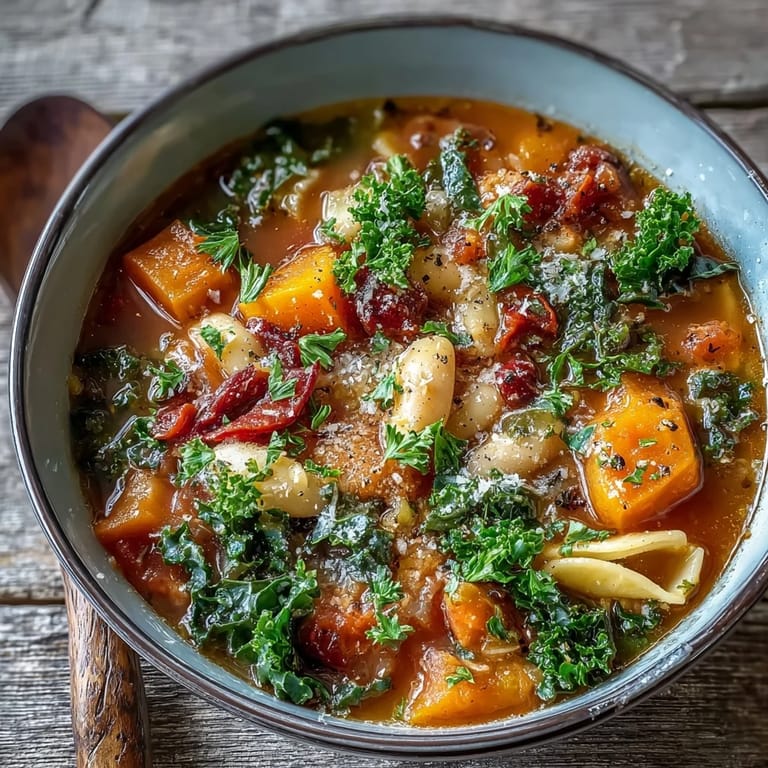
 I learned to make this soup properly after a friend's mother, who'd grown up near Naples, gently pointed out that I'd been adding everything at once like I was making a dump soup rather than building layers. She showed me how the aromatics need time to become sweet, how the squash needs a moment to caramelize, and how patience in the beginning means a better-tasting pot at the end. That conversation changed how I approach soup entirely, and I think about it every time I sauté those first vegetables.
Why This Soup Works in Winter
Butternut squash peaks in flavor when the weather turns cold, which is when you're most likely to want a bowl of something warm anyway. The sweetness of the squash bridges the gap between the acidity of tomatoes and the earthiness of beans, creating a soup that feels balanced and nourishing rather than one-note. Kale is also at its best after the first frost, when the cold converts its starches to sugar, making it taste less bitter and more pleasant to eat in volume.
Make It Your Own
This recipe is really a template that welcomes your additions and substitutions without complaint. I've made it with kidney beans instead of cannellini, added spinach when I didn't have kale, swapped out the pasta for farro when I wanted something heartier, and thrown in a Parmesan rind that I always remove before serving because it adds an incredible savory depth. The beauty of minestrone is that it exists to use what you have and what's seasonal, so don't feel locked into exact measurements or ingredients.
Serving Suggestions and Storage
This soup is best eaten the day you make it while the pasta still has some structure and the kale's color is still bright, but it stores beautifully for three to four days in the refrigerator and even freezes well if you leave it unseasoned until after it thaws. Serve it with crusty bread for soaking up the broth, or pair it with a crisp white wine like Pinot Grigio if you want something to sip alongside. If you're reheating it and the pasta has absorbed too much liquid, add a splash of broth or water to get back to the consistency you want.
- Store leftovers in an airtight container and reheat gently on the stovetop rather than in the microwave, which can make the vegetables mushy.
- Freeze the soup without the pasta and kale, then add those fresh when you reheat it so they don't turn to mush during thawing.
- Make a double batch and freeze half, because this is one of those soups that actually improves in flavor after a day or two as everything melds together.
 Pin it
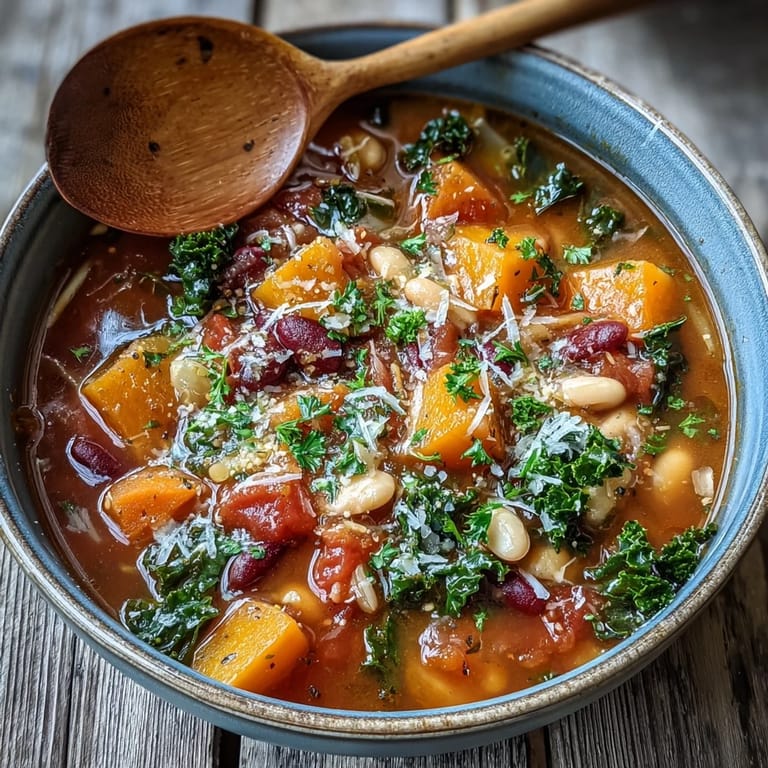
 This minestrone has become my reliable friend through countless cold months, the kind of soup that asks almost nothing of you but rewards you with warmth and flavor. Make it once and you'll understand why Italian grandmothers have been making versions of it for generations.
Recipe Questions & Answers
- → Can I make this soup ahead of time?
Absolutely. This soup actually tastes better the next day as flavors meld. Store in the refrigerator for up to 4 days. Add a splash of water or broth when reheating since pasta absorbs liquid.
- → What pasta works best?
Small shapes like ditalini, elbow macaroni, or small shells work perfectly. They hold up well during simmering and are easy to scoop. Gluten-free pasta also works great.
- → Can I freeze this soup?
Yes, freeze for up to 3 months. Consider cooking pasta separately and adding it when reheating to prevent it from becoming mushy. Leave out Parmesan until serving.
- → How do I make it vegan?
Simply skip the Parmesan or use a dairy-free alternative. The rest of the soup is naturally plant-based. Nutritional yeast makes a good savory topping substitute.
- → What can I substitute for butternut squash?
Try acorn squash, delicata squash, or sweet potatoes. They offer similar sweetness and texture. Adjust cooking time slightly as some varieties cook faster than others.
- → Is kale necessary?
Spinach or Swiss chard work beautifully too. Add spinach in the last minute since it wilts quickly. Chard takes a bit longer, similar to kale.