 Pin it
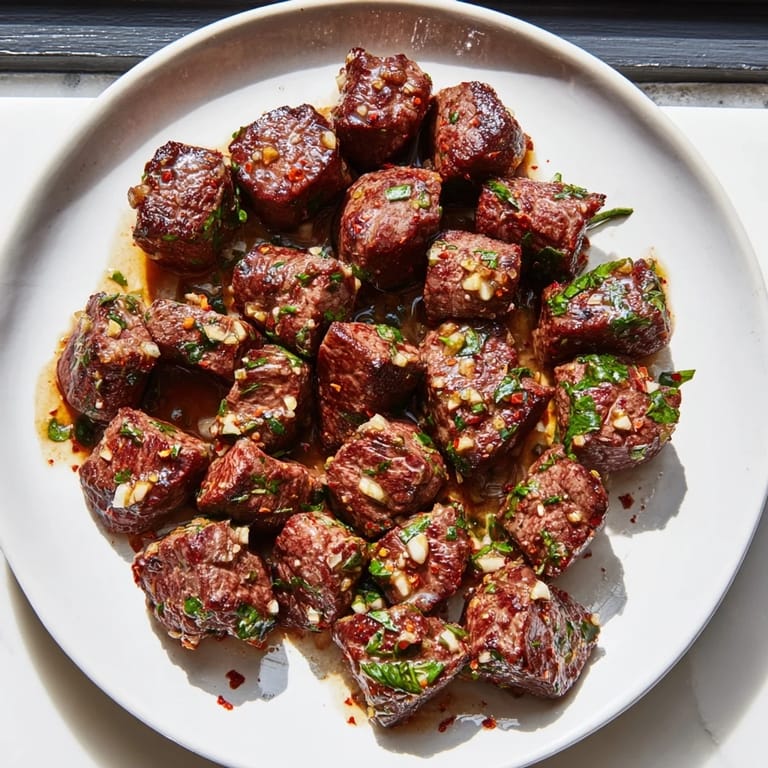
 There was a Tuesday night when I had fifteen minutes and a hunger that wouldn't quit, so I grabbed a sirloin from the freezer and decided to make something quick. I cut it into rough cubes, heated my old cast iron until it was almost smoking, and suddenly the kitchen filled with this incredible aroma—butter, garlic, that sizzle of meat hitting hot oil. My partner wandered in asking what smelled so good, and by the time I'd tossed it all together, we were eating something that felt way too restaurant-worthy for a weeknight rescue mission.
I made this for a small dinner party once, and someone asked for the recipe before they'd even finished their plate—which almost never happens. The funny part was explaining that it's not fancy at all, just good technique with humble ingredients. We ended up making a second batch halfway through the night because four servings vanished faster than I'd expected.
Ingredients
- Sirloin steak, 1.5 lbs cut into 1-inch cubes: The workhorse of quick cooking—tender enough to feel special but affordable enough to make regularly without guilt.
- Kosher salt, 1 tsp: Don't skip seasoning before the pan; it's what transforms good meat into memorable bites.
- Black pepper, 1/2 tsp: Freshly ground makes all the difference—pre-ground tastes flat by comparison.
- Unsalted butter, 3 tbsp: The foundation of the sauce, so use real butter; it's only three tablespoons anyway.
- Garlic, 4 cloves finely minced: Mincing by hand lets you catch the moment it's perfect, rather than a food processor obliterating it.
- Fresh parsley, 1 tbsp chopped: A last-second brightness that stops the dish from feeling heavy.
- Crushed red pepper flakes, 1/2 tsp (optional): A whisper of heat that makes your palate wake up.
- Olive oil, 1 tbsp: For the initial sear—it can handle the high heat better than butter alone.
Tired of Takeout? 🥡
Get 10 meals you can make faster than delivery arrives. Seriously.
One email. No spam. Unsubscribe anytime.
Instructions
- Dry the meat and season boldly:
- Pat each cube dry with paper towels—moisture is the enemy of a good crust. Season generously with salt and pepper, making sure every surface gets touched.
- Get the pan genuinely hot:
- Heat your skillet over high heat until a drop of water beads and dances across it. Add olive oil and let it shimmer before you add the steak.
- Sear without moving:
- Arrange cubes in a single layer without crowding (work in batches if needed). Leave them undisturbed for 2 minutes—that's when the crust forms. Then turn and sear the remaining sides for 2–3 minutes until medium-rare.
- Build the garlic butter sauce:
- Drop the heat to medium-low, add butter, and once it's melted and foaming, add garlic. Stir constantly for just 30 seconds—you want fragrant, not brown.
- Finish and serve:
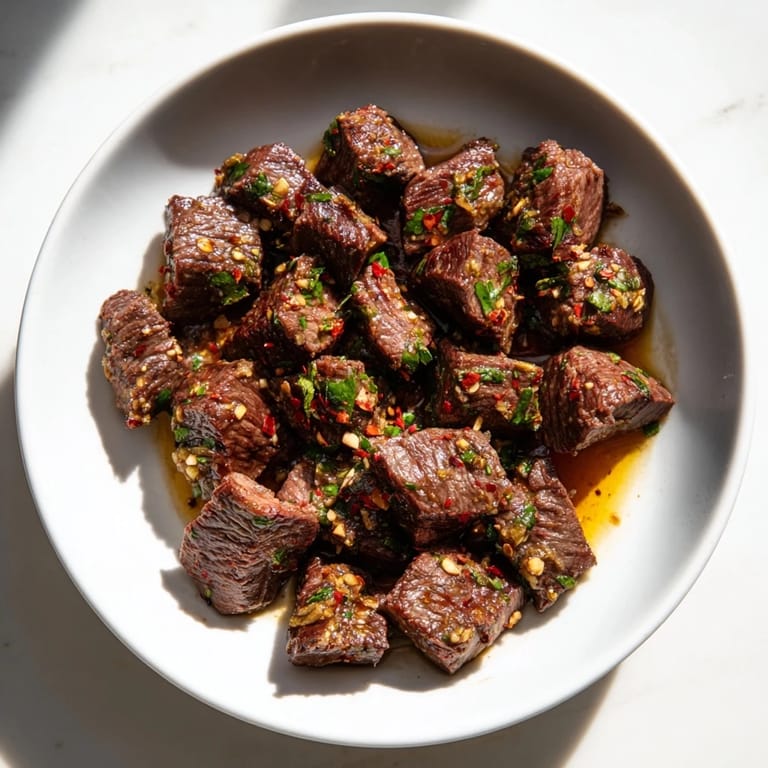
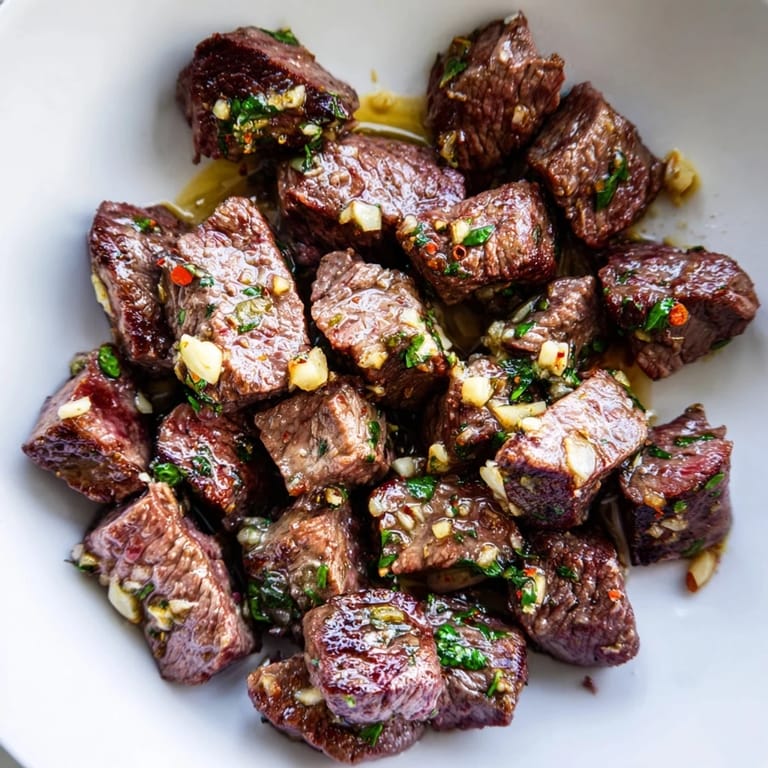
- Return the steak to the pan, toss everything together for 30 seconds, then finish with parsley and red pepper flakes. Serve immediately with the pan sauce spooned over top.
 Pin it
 I remember watching someone take their first bite at a dinner table, and their expression went quiet for a second—that little pause before they said it was perfect. It wasn't complicated or precious, just butter and garlic and good technique, and somehow that simplicity made it more satisfying than anything overcomplicated.
Why Cast Iron Matters
A cast iron skillet holds heat like nothing else, which means your meat gets that restaurant-quality crust instead of a pale sear. If you don't have cast iron, any heavy-bottomed skillet works, but the results feel slightly different—less dramatic, less golden. I've made this in stainless steel when cast iron wasn't available, and it's fine, but there's a reason the old pan in my kitchen gets used first.
Playing With Variations
Once you've made this once, it becomes a canvas for small experiments. A splash of lemon juice cuts through the richness and brightens everything. Worcestershire adds umami depth. Some nights I've stirred in a touch of Dijon mustard at the end, or used thyme instead of parsley, or even finished with a tiny splash of red wine while the pan is still hot. The core technique stays the same, but you can shift the mood based on what sounds good.
What to Serve It With
These bites work equally well as a main course over creamy mashed potatoes where the pan sauce soaks in, or as an appetizer where people eat them with toothpicks. Crusty bread is always right—it should be used to soak up every drop of butter and garlic. Steamed green beans or a simple salad add freshness if you want balance, but honestly, the steak bites are complete on their own.
- Over mashed potatoes, the pan sauce becomes something you'll want to drink.
- With crusty bread, you get to taste every layer of butter and garlic separately.
- As an appetizer on toothpicks, these disappear before people realize they're full.
 Pin it
 This recipe became a regular in my rotation because it proves that food doesn't need to be complicated to be delicious—just honest ingredients and patience for five minutes in a hot pan. It's the kind of dish that makes you feel like you're taking care of yourself without any fuss.
Recipe Questions & Answers
- → What cut of steak works best?
Sirloin steak cut into 1-inch cubes offers a tender, flavorful bite, but ribeye or New York strip can also be used for variation.
- → How do I achieve the perfect sear?
Use a hot skillet, avoid overcrowding the pan, and sear the steak cubes undisturbed for 2 minutes before turning to brown all sides evenly.
- → Can I adjust the garlic butter sauce?
Yes, adding a splash of lemon juice or Worcestershire sauce enhances the flavor, while red pepper flakes provide optional heat.
- → What sides pair well with this dish?
Crusty bread, mashed potatoes, or steamed vegetables complement the savory garlic butter steak bites perfectly.
- → Is this suitable for gluten-free diets?
Absolutely, ensure that all ingredients, especially butter, are gluten-free, and check any store-bought additions for allergens.