 Pin it
 The first time I tasted authentic mango sticky rice was at a tiny stall in Bangkok on a sweltering afternoon, and I was immediately struck by how something so simple—just rice, coconut, and fruit—could feel so luxurious. The vendor's hands moved with such ease, warming the coconut sauce over a low flame while steam rose from the sticky rice, and I remember thinking this couldn't possibly be difficult to recreate at home. Years later, I've learned it's less about technique and more about respect for each ingredient and a little patience. Now when I make it, I'm transported back to that humid street corner, except I'm in my own kitchen with mango juice on my fingers.
I made this for a dinner party once and watched my guests go quiet the moment they took the first bite—that kind of satisfied silence that tells you something is working. My friend Marcus, who claims he never wants dessert, came back for seconds, and later admitted he'd been thinking about it all week. That's when I realized this dish has a magic to it: it's elegant enough to impress, but comforting enough that people feel they can ask for the recipe without hesitation.
Ingredients
- Glutinous (sweet) rice, 1 cup: This short-grain rice is essential—regular rice won't give you that creamy, tender texture that makes the dish special, and rinsing it thoroughly removes excess starch so the coconut sauce coats evenly.
- Coconut milk (full fat), 1 cup: Don't reach for lite coconut milk here; the fat is what makes the sauce silky and luxurious, and it's the whole reason this dessert sings.
- Granulated sugar, 1/4 cup: A gentle sweetness that doesn't overpower the mango; you can always taste and adjust before serving.
- Salt, 1/4 tsp: This small pinch awakens the flavors and brings the coconut and mango into better harmony.
- Large ripe mangoes, 2: The mango is your star, so choose fruit that smells fragrant at the stem and yields slightly to pressure—this is where quality makes an enormous difference.
- Coconut cream (optional), 2 tbsp: A luxurious drizzle on top that adds richness and visual appeal if you want to go that extra mile.
- Toasted sesame seeds or mung beans (optional), 1 tbsp: A light garnish that adds a subtle crunch and nutty flavor without competing with the main players.
Tired of Takeout? 🥡
Get 10 meals you can make faster than delivery arrives. Seriously.
One email. No spam. Unsubscribe anytime.
Instructions
- Prepare the rice:
- Rinse the glutinous rice under cold running water, rubbing it gently between your hands until the water runs completely clear—this takes longer than you'd think, but it's what separates silky rice from gluey rice. Cover it with fresh water and let it soak for at least 4 hours, or leave it overnight if you're planning ahead.
- Steam the rice:
- Drain the soaked rice and transfer it to a cheesecloth-lined steamer basket, then steam for 25 to 30 minutes until the grains are tender and cooked through. You'll know it's ready when a single grain bends easily between your fingers without breaking.
- Warm the coconut sauce:
- While the rice steams, pour coconut milk into a small saucepan with the sugar and salt, then heat gently over medium heat, stirring occasionally until the sugar dissolves completely. Keep the heat low—you want the sauce warm and smooth, never boiling or breaking.
- Coat the rice:
- Once the rice is cooked, transfer it to a mixing bowl and pour about three-quarters of the warm coconut sauce over it, stirring gently and patiently until every grain is coated. Cover the bowl and let it sit for 10 to 15 minutes so the rice can fully absorb the coconut flavor and become even creamier.
- Prepare the mango:
- While the rice absorbs the sauce, peel your mangoes and slice them into thin, even pieces—the presentation matters here, so take your time. Lay the slices out on your serving plates as you work.
- Compose and serve:
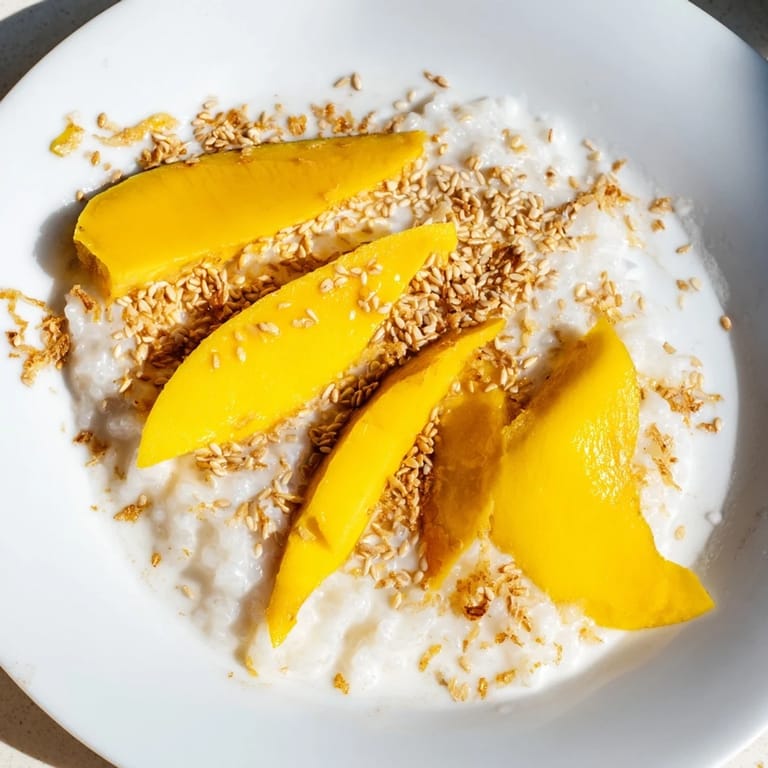
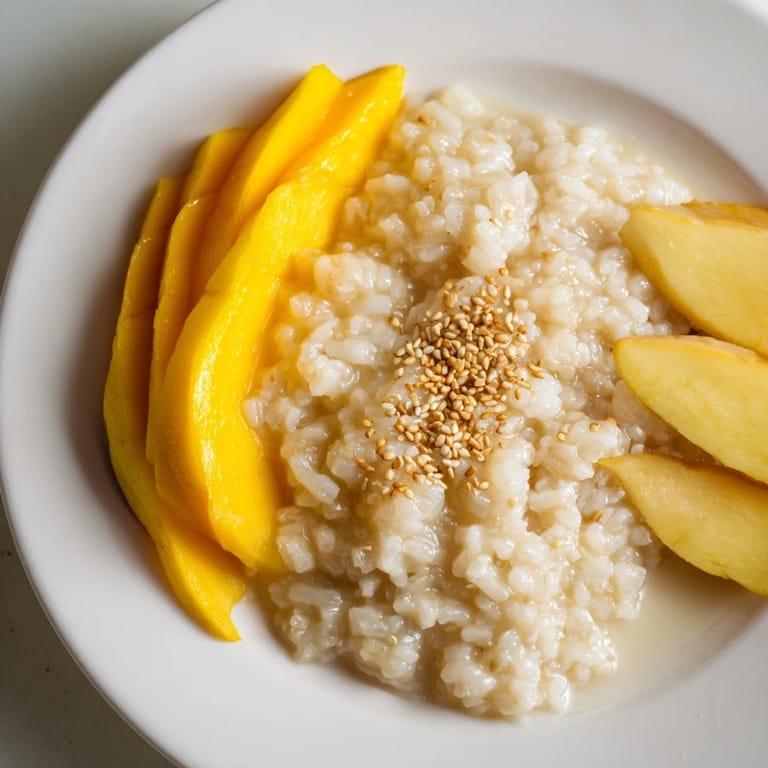
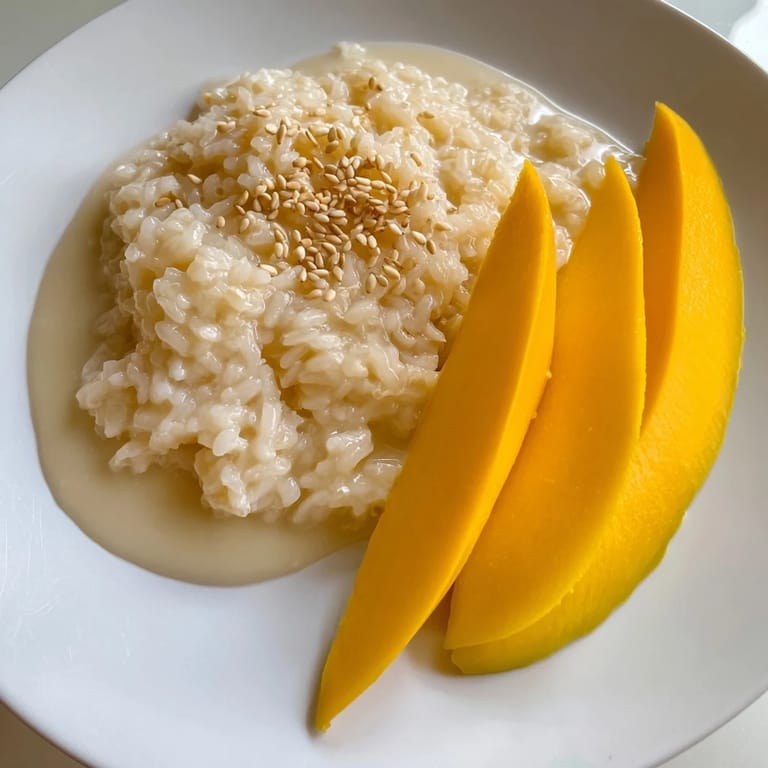
- Mound a generous portion of warm sticky rice on each plate, arrange the mango slices alongside it in a gentle curve, then drizzle with the remaining coconut sauce so it pools slightly around the rice. Add a small spoonful of coconut cream and a light sprinkle of sesame seeds or mung beans if you're using them, then serve immediately while the rice is still warm.
 Pin it
 There's something deeply satisfying about serving this dessert warm—the way the rice yields to your spoon, the way the mango's sweetness plays off the coconut's richness, the quiet joy of watching someone experience it for the first time. In those moments, it feels less like you've made a dessert and more like you've given someone a small gift of comfort.
Why Rice Texture Matters More Than You Think
The secret to mango sticky rice isn't actually a secret at all—it's understanding that sticky rice wants to be treated gently and given time. When I first made this, I tried to hurry the process, skipping the full soak and rushing the steaming, and the result was rice that was simultaneously crunchy and mushy, which is not the goal. Once I slowed down and respected each step, everything changed. The rice became tender, the coconut sauce coated it beautifully, and the whole dish finally made sense.
Choosing and Ripening Your Mango
Mango selection is where this dish succeeds or disappoints, so choose carefully. A ripe mango should smell sweetly fragrant near the stem, feel slightly soft when you press it gently, and have skin that's blemish-free. If you're buying ahead of time, pick fruit that's almost ripe and let it sit at room temperature for a day or two—never refrigerate unripe mangoes, as the cold stops them from ripening properly. The moment it reaches that perfect softness and smells irresistible, peel and slice it immediately.
Making It Your Own
While this recipe is traditional, I've found that small changes can make it feel personal to your kitchen. Some versions add a whisper of pandan leaves to the steaming water for floral fragrance, or swap granulated sugar for palm sugar to deepen the coconut flavor. The beauty of this dish is that it's forgiving enough to adapt, yet structured enough that the fundamentals always work. Play with garnishes—try crushed pistachios, toasted coconut flakes, or even a drizzle of passion fruit curd if you're feeling adventurous.
- Pandan leaves add a subtle, haunting fragrance that makes the rice even more aromatic and authentic.
- Palm sugar creates a deeper, almost caramel-like sweetness that shifts the whole flavor profile slightly toward earthiness.
- Fresh mango is non-negotiable, but frozen mango works in a pinch if you thaw it gently and drain any excess liquid before serving.
 Pin it
 This dessert has a way of becoming a favorite the moment someone tastes it, and I hope it becomes one of yours too. There's something about offering someone warm, creamy, sweet rice with fresh mango that says you care, and that's the real magic of it.
Recipe Questions & Answers
- → What type of rice is best used?
Glutinous or sweet rice is ideal as it becomes sticky and absorbs the coconut sauce well.
- → Can I steam the rice without cheesecloth?
Cheesecloth helps keep the rice grains together and prevents sticking, but a fine mesh steamer basket can also work.
- → What alternative sweeteners can be used?
Palm sugar is an excellent substitute for granulated sugar, adding a deeper, caramel-like flavor.
- → How can pandan leaves enhance the dish?
Adding pandan leaves while steaming infuses a subtle floral fragrance that complements the coconut and mango.
- → Is coconut cream necessary for garnish?
Coconut cream is optional but adds richness and a smooth finish to the presentation and flavor.