 Pin it
 The first time I grabbed a paper cone of tteokbokki from a Seoul street vendor, I burned the roof of my mouth on the first bite—too eager, no patience. But that initial sting gave way to something addictive: chewy rice cakes surrendering to a sauce that was spicy, sweet, and somehow comforting all at once. Now I make it at home whenever I crave that exact moment of chaos and satisfaction, and it never fails to transport me back to standing on a crowded street corner, sauce on my fingers, completely happy.
I served this to my roommate on a particularly stressful Thursday, and watching her face shift from stress to pure joy as she ate was worth every minute of preparation. She went back for thirds and asked if I could make it every week, which I haven't done, but the fact that she asked says everything about how this dish lands.
Ingredients
- Korean cylindrical rice cakes (tteok), 500 g: These are the heart of the dish, and soaking them briefly before cooking makes all the difference—they absorb the sauce better and stay perfectly chewy rather than turning to mush.
- Large eggs, 4: The boiled eggs add richness and a textural contrast that breaks up the heat, plus they're a reminder that balance matters in cooking and in life.
- Gochujang (Korean chili paste), 3 tablespoons: This is where the soul of the dish lives, fermented and complex, so don't shortchange it or reach for a substitute.
- Gochugaru (Korean chili flakes), 2 tablespoons: The fresh, bright heat comes from this, and you can dial it up or down depending on whether you're cooking to impress or to punish yourself in the best way.
- Soy sauce, 2 tablespoons: Use good soy sauce here if you can—it's a small investment that you'll taste in every bite.
- Sugar, 1 tablespoon: This rounds out the heat and salt, creating a sauce that doesn't let any single note dominate.
- Honey or corn syrup, 1 tablespoon: Honey adds a subtle floral note and helps the sauce glisten; corn syrup works just fine too.
- Garlic, 2 cloves minced: Fresh, not powdered—the fragrance matters as much as the flavor here.
- Toasted sesame oil, 1 teaspoon: A little goes a long way, and this adds a nutty depth that makes people ask what your secret is.
- Water, 3 cups: This becomes your broth base, so use filtered water if you're in a hard water area.
- Dried kelp (kombu), 1 piece (10x10 cm): It infuses the broth with umami that you can feel but not quite name, then you remove it before serving.
- Dried anchovies, 8 (heads and guts removed): These are optional but worth seeking out—they add a savory backbone that makes the whole dish sing, though you can omit them for vegetarian versions.
- Small onion, 1 sliced: The onion softens into the sauce and adds sweetness that balances the heat.
- Green onion, 1 sliced: This goes on at the very end and provides a fresh pop that cuts through the richness.
- Fish cake, 1 sheet sliced (optional): It adds a gentle, slightly bouncy texture that some people love; skip it if it's not your thing.
- Toasted sesame seeds, 1 tablespoon: A whisper of these at the end reminds you that finishing matters.
Tired of Takeout? 🥡
Get 10 meals you can make faster than delivery arrives. Seriously.
One email. No spam. Unsubscribe anytime.
Instructions
- Soak your rice cakes:
- Drop the tteok into a bowl of warm water and let them sit for about 10 minutes, especially if they've been in the fridge or freezer. They'll soften slightly and be much more willing to absorb the sauce when they hit the pan.
- Build your broth:
- Pour water into your saucepan, add the kombu and anchovies, and bring everything to a gentle boil. Simmer for 10 minutes—the house will smell incredible—then fish out the solids. You're left with a broth that tastes like the ocean was very, very kind to it.
- Boil the eggs:
- While the broth happens, place your eggs in cold water and bring to a boil, then turn off the heat and let them sit for 8–9 minutes. Plunge them into cold water immediately—the ice bath stops the cooking and makes them easier to peel. You want those yolks still slightly soft if you can manage it.
- Make your sauce base:
- Whisk the gochujang, gochugaru, soy sauce, sugar, honey, minced garlic, and sesame oil directly into your warm broth. Stir until everything dissolves and you have a cohesive, glossy sauce that coats the back of a spoon.
- Cook the rice cakes:
- Drain your soaked tteok and add them to the sauce along with the sliced onion and fish cake if you're using it. Stir occasionally as it simmers over medium heat for 10–12 minutes, until the rice cakes are tender and chewy and the sauce has thickened enough to cling to them. The kitchen will fill with a smell that makes everyone stop what they're doing.
- Finish with eggs:
- Peel your cooled eggs and add them to the pot, letting them warm through for another 2–3 minutes so they pick up the heat and flavor of the sauce.
- Garnish and serve:
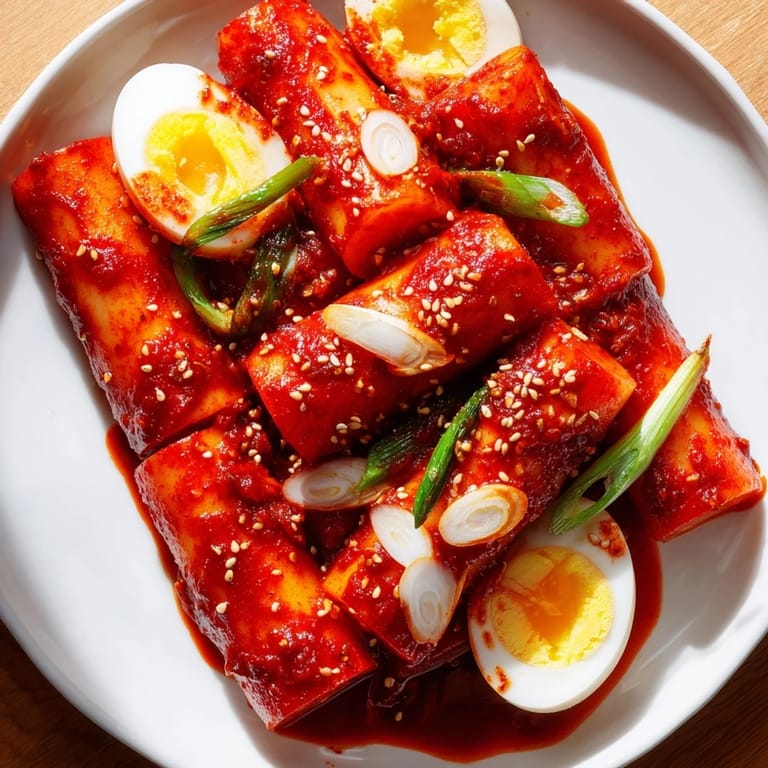
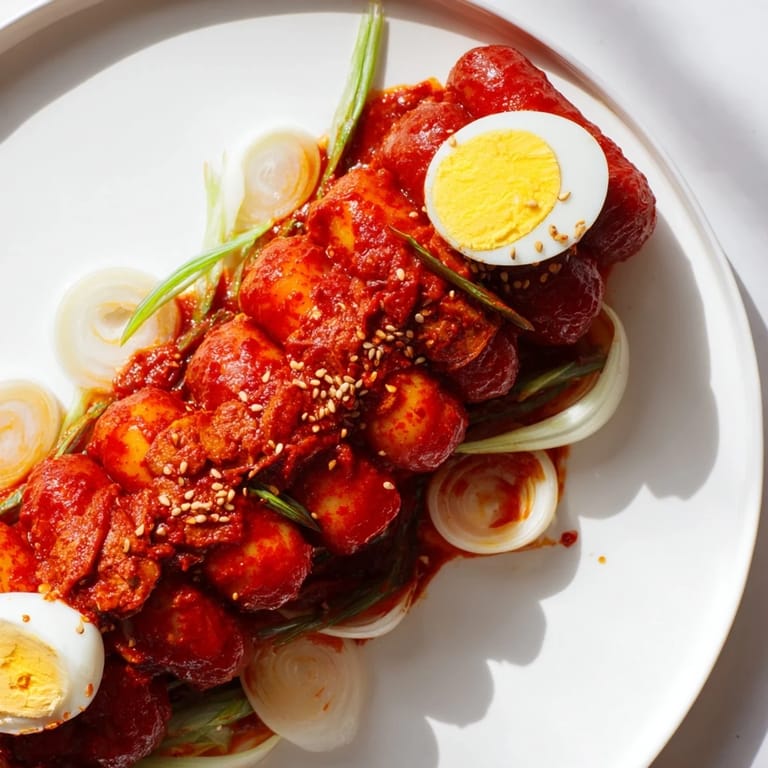
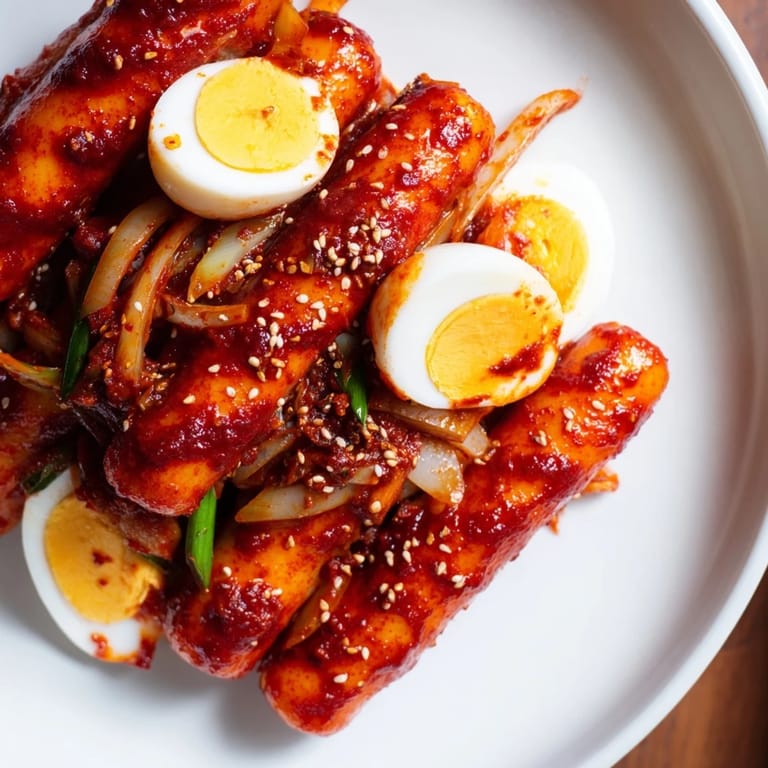
- Scatter the green onions and sesame seeds over the top right before serving, so they stay fresh and bright against the deep red of the sauce.
 Pin it
 There's a moment about halfway through cooking when the smell hits you so strongly that you stop thinking and just exist in that sensory experience. That's when I know everything is going right, and that's when I remember why this dish means something to me beyond just being delicious food.
Balancing Heat and Sweetness
The best tteokbokki walks a line between spicy and sweet, and that balance is personal. Some people grew up with sauce that leans hot, others with versions that are almost candied. The honey or corn syrup matters more than you'd think—it's not about making it dessert, it's about giving your palate something to grab onto between waves of heat. If you add the sweetener and taste it and think it's still too aggressive, you can add a touch more honey, and if it suddenly tastes like candy, a squeeze of lemon juice or a dash of vinegar will snap it back to attention.
Texture Matters
The beauty of this dish is that it's a textural conversation: the slippery sauce, the yielding rice cakes, the gentle resistance of the boiled eggs, the slight chew of the fish cake if you've included it, and the brightness of raw green onion at the end. Every element deserves to be there, and removing one changes the whole experience. Experiment with additions if you want—cabbage wilts into the sauce, carrots stay crunchy if you add them late, ramen noodles absorb the sauce and become something wonderful—but understand that each change shifts the balance of what the dish is about.
When to Serve and How to Keep It Special
Tteokbokki is best eaten hot, right after it comes together, which is part of why it's a street food—there's an immediacy to it. If you're making it ahead, store the rice cakes, sauce, and eggs separately and warm them gently before serving, stirring occasionally so nothing sticks to the bottom and scorches. Reheated tteokbokki isn't quite the same as fresh, so plan accordingly.
- Serve this as a main dish if you pair it with rice and a simple side salad, or as a snack that feels more substantial than its calorie count suggests.
- Make double the sauce if you're cooking for people who like to soak their rice in extra sauce, because they will ask for more.
- Keep sesame seeds and green onions on the table so people can adjust the brightness and finish to their own taste.
 Pin it
 This dish has a way of turning an ordinary weeknight into something worth remembering, and that's really all cooking should do. Make it, eat it hot, and enjoy the way it brings people together over something simple and genuinely good.
Recipe Questions & Answers
- → How do I soften the rice cakes if they are hard?
Soak the rice cakes in warm water for 10 minutes prior to cooking to restore their chewiness and ensure even cooking.
- → Can I make this dish vegetarian?
Yes, simply omit the anchovies and fish cake, and use vegetable broth instead of the traditional seafood broth.
- → What gives the sauce its spicy-sweet flavor?
The combination of gochujang, gochugaru, soy sauce, sugar, and honey balances heat with sweetness, creating a rich and vibrant sauce.
- → How should I cook the eggs for the best texture?
Boil the eggs for 8-9 minutes, then cool and peel them to add a tender, creamy element to the dish.
- → Are there common allergens in this dish?
Yes, it contains soy from soy sauce, eggs, fish from anchovies and fish cake, as well as sesame oil and seeds. Check labels if gluten sensitivity is a concern.
- → Can I add vegetables to this dish?
Absolutely. Adding sliced cabbage, carrots, or ramen noodles can provide extra texture and nutrients.