 Pin it
 The first time I made okonomiyaki at home, I was standing in a Tokyo night market at two in the morning, watching a vendor flip these impossible-looking pancakes with one hand while managing a line of hungry salarymen with the other. Years later, I finally understood what made his version sing—it wasn't technique, it was confidence, and the willingness to let cabbage be the star. Now when I make these savory pancakes in my own kitchen, I chase that same magic: crispy edges, a tender center loaded with vegetables, and those dancing bonito flakes that seem alive on the hot surface.
I made these for a small dinner party last spring, and my friend Sarah—who claimed she didn't like vegetables—came back for thirds. She kept asking about the sauce, the texture, whether she could somehow replicate what she was tasting. That's when I realized okonomiyaki does something special: it sneaks vegetables into something so utterly satisfying that people stop thinking about what they're eating and just enjoy the moment.
Ingredients
- All-purpose flour: The foundation that binds everything together; I've found that whisking it with dashi creates a batter that's lighter than you'd think.
- Dashi stock: Use the real thing if you can find it—the umami flavor elevates the whole dish and makes the batter taste authentically Japanese, though water works in a pinch.
- Eggs: These act as your structural glue, so don't skimp on quality here.
- Shredded cabbage: This is the heart of okonomiyaki; shred it finely so it distributes evenly and cooks through without turning mushy.
- Green onions: Fresh and aromatic, they add a brightness that balances the richness of the sauce.
- Okonomiyaki sauce: The tangy-sweet glaze that makes these pancakes unmistakably Japanese; a good bottle changes everything.
- Japanese mayonnaise (Kewpie): Creamier and richer than regular mayo, it's worth seeking out for its subtle sweetness.
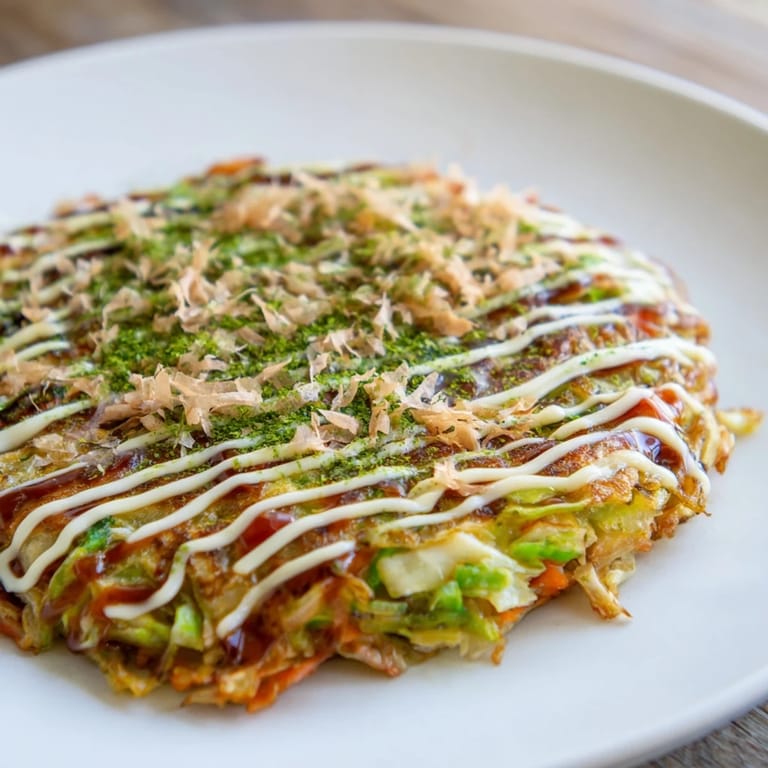
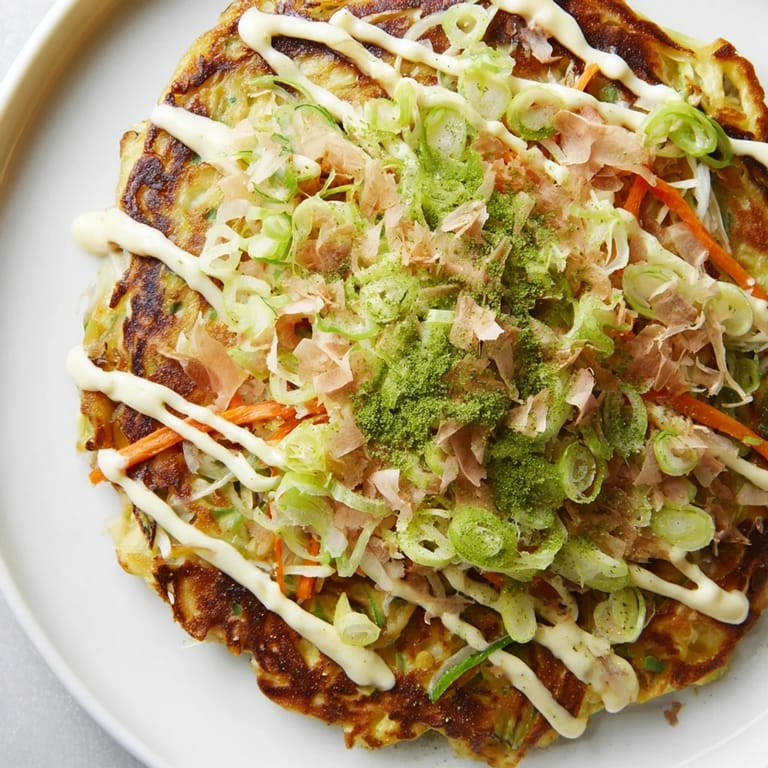
- Bonito flakes: These paper-thin shavings of smoked fish literally dance from the heat—pure visual magic and incredible umami.
Tired of Takeout? 🥡
Get 10 meals you can make faster than delivery arrives. Seriously.
One email. No spam. Unsubscribe anytime.
Instructions
- Whisk your batter smooth:
- In a large bowl, combine flour, dashi stock, eggs, salt, and baking powder, whisking until there are no lumps. This takes just a minute and makes all the difference in texture.
- Fold in the vegetables:
- Gently fold in the shredded cabbage, green onions, carrot, and your choice of protein until everything is evenly mixed through the batter. Don't overwork it—just make sure nothing is hiding at the bottom of the bowl.
- Heat your skillet and oil:
- Get your nonstick skillet warming over medium heat with a small amount of oil; you want it hot enough that a drop of batter sizzles immediately, but not so hot that it burns.
- Pour and shape:
- Scoop about 1 cup of batter into the center of the skillet and gently shape it into a thick round disk about 6 inches wide. Let it settle and start cooking undisturbed.
- Cook until golden:
- Let the first side cook for 4–5 minutes without moving it around; you're looking for a deep golden brown crust that holds together. This patience is what separates flat and sad from crispy and delicious.
- Flip with confidence:
- When the bottom is truly golden, slip a spatula underneath and flip in one smooth motion. The second side will cook faster, usually 4–5 minutes, and you'll know it's done when it feels slightly firm when you press the edge.
- Repeat and keep warm:
- Transfer cooked pancakes to a plate and repeat with the remaining batter, adding a little more oil to the skillet as needed. Stack them gently; they'll stay warm enough for everyone to sit down together.
- Top and serve immediately:
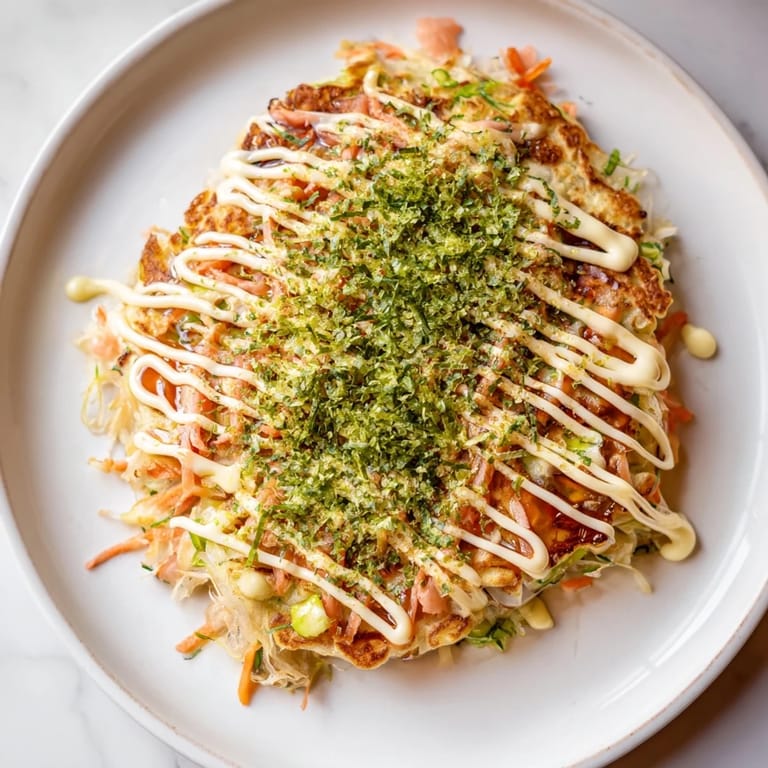
- While the pancakes are still steaming, drizzle generously with okonomiyaki sauce and mayonnaise in a zigzag pattern. The heat will slightly warm the toppings and meld everything together in the best way.
- The final flourish:
- Sprinkle bonito flakes, aonori, and pickled ginger on top right before serving. Watch as the bonito flakes curl and dance from the residual heat—this is the moment your kitchen smells like a Tokyo food stall.
 Pin it
 There was a quiet Tuesday afternoon when I made these for myself alone, with no one to impress, and that's when I really tasted them properly. The butter-soft center, the contrast of crispy edges, the way those flavors layered and built with each bite—it reminded me that simple food, made with attention, becomes something you'll remember.
The Art of the Flip
Flipping okonomiyaki is a small test of nerve, but it's worth learning because it changes everything about the texture. A confident flip keeps the pancake intact and creates that beautiful crust on both sides; a timid one leaves you with something flat and broken. I used to hesitate, worried I'd mess it up, until I realized the skillet and spatula do most of the work if you just trust them. Medium heat, a thin but sturdy spatula, and one smooth motion—that's the whole secret.
Why Sauce Matters
Okonomiyaki sauce is the difference between a savory pancake and something that tastes like it came from a specific place. It's tangy, slightly sweet, and somehow savory all at once, with a depth that regular ketchup or barbecue sauce can never match. If you can't find a bottle, homemade is genuinely better than improvisation, so it's worth a quick search online or at an Asian market. The good news is one bottle lasts through many batches, and it's worth keeping on hand even after this recipe.
Serving and Pairing Ideas
These pancakes are somehow perfect as a casual lunch, a late-night snack, or the centerpiece of a dinner table conversation. They pair beautifully with cold Japanese beer or iced green tea, but honestly they don't need much beyond themselves. I've found they're best eaten immediately while everything is still warm and the bonito flakes are still dancing, but they're also surprisingly good at room temperature if you need to make them ahead.
- Serve with a side of cucumber salad or pickled vegetables to cut through the richness.
- A squeeze bottle makes applying the sauce and mayo easier and more dramatic—totally worth the small investment.
- Have extra pickled ginger on the side for anyone who wants to add more spice and sharpness.
 Pin it
 Okonomiyaki reminds me that some of the most satisfying dishes are built on simplicity—just good vegetables, a proper batter, and toppings that celebrate rather than hide. Make these on a night when you have a little time and the freedom to enjoy them without rushing.
Recipe Questions & Answers
- → What makes okonomiyaki batter unique?
The batter combines all-purpose flour with dashi stock instead of just water, enhancing the flavor and creating a light, savory base.
- → Can I substitute ingredients for dietary preferences?
Yes, omit shrimp or bacon and bonito flakes for a vegetarian option, increasing vegetables as needed to maintain texture and flavor.
- → How do you achieve the crispy texture on pancakes?
Cooking over medium heat with a bit of oil allows the pancake edges to crisp while keeping the inside tender and moist.
- → What toppings are traditional for this dish?
Okonomiyaki sauce, Japanese mayonnaise, bonito flakes, aonori seaweed flakes, and pickled ginger combine for signature tangy, creamy, smoky, and fresh notes.
- → Is there a best way to serve these pancakes?
Serve hot immediately after cooking to enjoy the contrast of crispy edges and soft centers topped with fresh, flavorful garnishes.