 Pin it
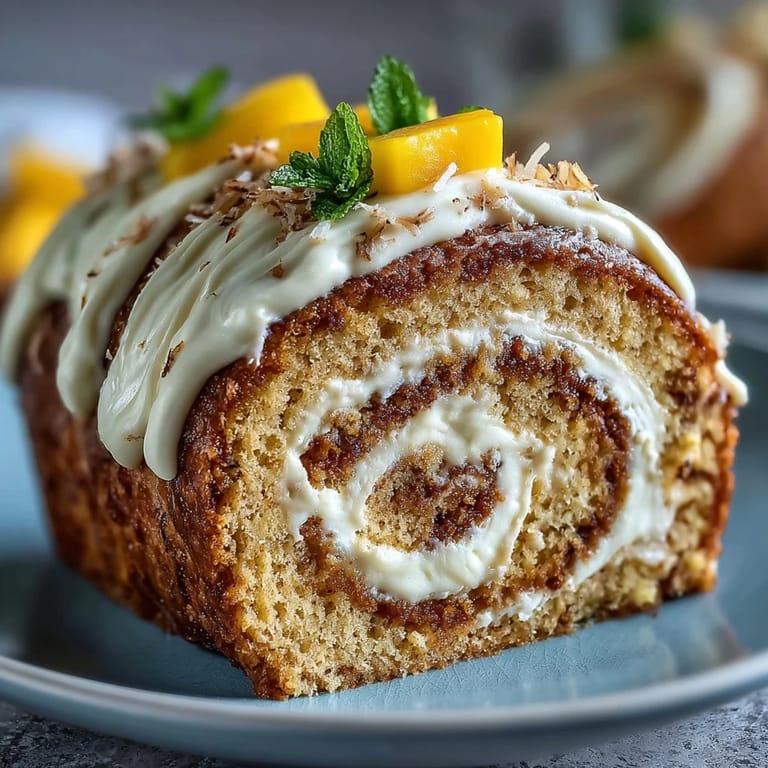
 The first time I watched someone unfurl a hojicha roll cake at a Japanese café in late autumn, I was mesmerized by how the delicate sponge spiraled into those perfect concentric rings. The earthy aroma of roasted green tea mingled with something bright and tropical, and I realized then that I needed to figure out how to make this at home. What started as a curiosity became an obsession with nailing the technique, learning that the magic lives in how gently you treat that ethereal sponge and how carefully you roll it without cracking.
I made this for a small gathering on a rainy afternoon, and watching my friends take that first bite was pure joy. Someone asked if I'd bought it from a bakery, which is the highest compliment a homemade dessert can receive. That moment taught me that the effort of folding egg whites and rolling warm cake pays off in the kind of memory people carry with them.
Ingredients
- Eggs, separated: Four large ones give you enough whites to create that signature airy crumb, and the yolks carry richness without heaviness.
- Granulated sugar (80 g divided): Split between the yolks and whites, it sweetens without overwhelming the delicate hojicha flavor.
- Whole milk (60 ml): Adds moisture and tenderness that keeps the sponge from drying out during rolling.
- Vegetable oil (50 ml): Creates a more tender crumb than butter would, making the cake easier to roll without cracking.
- Cake flour and cornstarch (70 g and 10 g): The combination gives you that whisper-light texture that shatters delicately on your tongue.
- Hojicha powder (1 tbsp in cake, 2 tsp in cream): This roasted green tea is where the soul of the dish lives, offering an earthy warmth that feels sophisticated.
- Salt (1/4 tsp): A tiny pinch that you won't taste but will make everything else taste more like itself.
- Heavy cream (200 ml, minimum 35% fat): The fat content matters here; it whips to silky peaks that hold the mango strips in place.
- Powdered sugar (2 tbsp): Dissolves instantly into the cream without grittiness.
- Mango (1 ripe one): Choose one that yields slightly to pressure but isn't mushy; it provides brightness and a subtle sweetness that complements the toasted tea.
Tired of Takeout? 🥡
Get 10 meals you can make faster than delivery arrives. Seriously.
One email. No spam. Unsubscribe anytime.
Instructions
- Get your oven and workspace ready:
- Preheat to 170°C and line your baking tray with parchment paper. This temperature is crucial; too hot and the edges will brown before the center sets, too cool and you'll end up with a dense, gummy cake.
- Create the yolk mixture:
- Whisk separated egg yolks with 40 g sugar until the mixture turns pale yellow and forms ribbons when you lift the whisk. Add milk and oil, stirring until completely smooth and emulsified.
- Fold in the dry ingredients:
- Sift cake flour, cornstarch, hojicha powder, and salt together, then fold gently into the yolk mixture using a spatula. Stop as soon as you see no white streaks; overmixing develops gluten and toughens the cake.
- Build the meringue:
- In a scrupulously clean bowl (any egg yolk will prevent peaks from forming), beat egg whites until foamy, then gradually add the remaining 40 g sugar while beating. Continue until stiff peaks form that stand up straight when you lift the whisk.
- Combine with grace:
- Fold the meringue into the yolk-flour mixture in three additions, turning the bowl as you gently cut down and fold. This protects all that air you've beaten in and keeps the batter light.
- Bake until perfect:
- Pour into the tray, smooth the surface, tap gently to release air bubbles, then bake for 13–15 minutes until the cake springs back when lightly touched. You're looking for a pale golden color, not brown.
- Invert while warm:
- Remove the cake from the oven and immediately invert it onto fresh parchment paper. The warm cake releases from the paper more easily, and working while still warm makes rolling less likely to crack.
- Cool properly:
- Peel away the original baking paper, cover loosely with a clean kitchen towel, and let cool completely at room temperature. This prevents condensation from making the cake soggy.
- Whip the hojicha cream:
- Pour cold heavy cream into a chilled bowl, add powdered sugar and hojicha powder, and whip to medium-stiff peaks. Soft peaks will ooze out when you roll; too stiff and it becomes grainy.
- Spread and arrange:
- Once the sponge is completely cool, spread hojicha cream evenly over the surface with an offset spatula. Arrange mango strips in a line along one short edge, leaving a half-inch border to prevent the cream from squishing out.
- Roll with confidence:
- Using the parchment as a guide, gently roll the cake from the edge with mango toward you, keeping tension even but not crushing. The parchment prevents sticking and gives you control.
- Chill to set:
- Wrap the rolled cake in parchment, place on a plate, and refrigerate for at least 30 minutes. This firms up the cream and makes slicing clean instead of messy.
- Finish and serve:
- Trim the messy ends with a sharp knife (wiping between cuts helps), slice with a gentle sawing motion, and dust with extra hojicha powder or powdered sugar if desired.
 Pin it
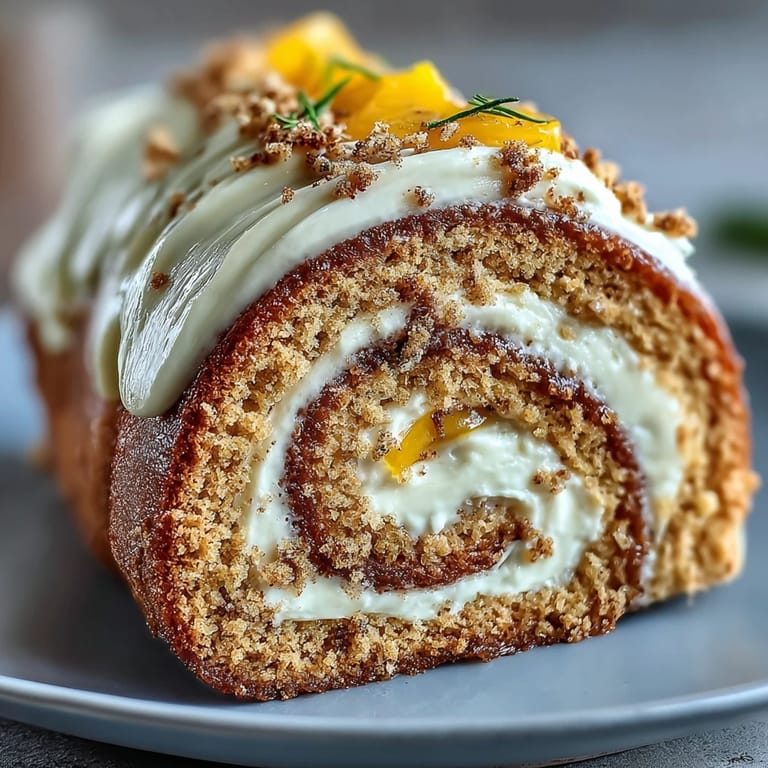
 There's something almost meditative about watching the rolled cake hold its shape in the refrigerator, knowing that the delicate structure you built is strong enough to slice and serve to people you care about. That moment of revealing those perfect spiral rings when you plate a slice feels like a small victory every single time.
The Science of the Sponge
Chiffon and sponge cakes work through the marriage of two opposing forces: whipped egg whites that trap air and a yolk mixture that carries fat and moisture. When you fold them together, you're creating a foam structure that sets in the oven while maintaining its delicate lift. The hojicha powder adds flavor without adding enough weight to collapse the structure, which is why you sift it with the flour instead of stirring it in later.
Working with Hojicha
Hojicha is different from regular matcha because it's roasted, which mellows the grassy notes and introduces a warmth reminiscent of toasted nuts and caramel. When you whip it into cream, it dissolves slowly and can create tiny specks if you're not patient; whisking thoroughly for a few extra seconds ensures an even color and smooth texture. The powder's flavor intensifies when mixed with fat, so a little goes a long way.
Storing and Serving Ideas
This cake tastes best eaten within two days of assembly, as the sponge gradually absorbs moisture from the cream and loses its delicate crumb. Store it in an airtight container in the refrigerator, and let it sit for five minutes at room temperature before serving so the flavors aren't muted by the cold. You can also freeze the undecorated sponge layer for up to two weeks, which gives you a head start on the assembly if you're planning ahead.
- Serve with a cup of hot hojicha tea to echo the flavors in the cake itself.
- Fresh berries like raspberries or blackberries work beautifully if mango isn't in season.
- A light dusting of hojicha powder on top just before serving adds visual appeal and a whisper of extra flavor.
 Pin it
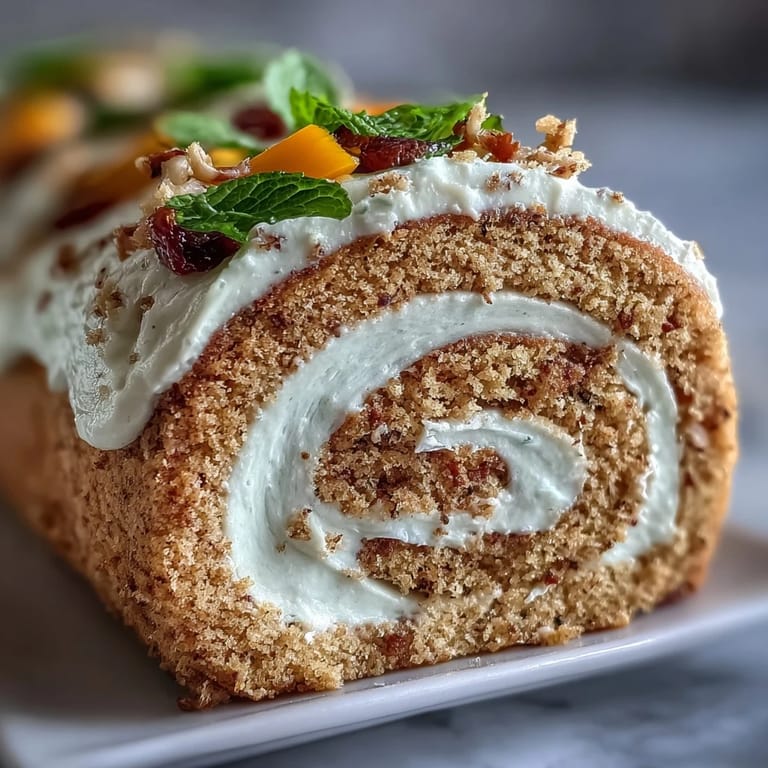
 This hojicha roll cake has become the dessert I reach for when I want to impress without spending all day in the kitchen. It's approachable enough that you'll feel proud when it turns out, yet elegant enough that nobody needs to know how simple it actually was.
Recipe Questions & Answers
- → What does hojicha taste like?
Hojicha has a distinctive earthy, nutty flavor with caramel-like notes. Unlike regular green tea, it's roasted over charcoal, giving it a reddish-brown color and milder, less bitter taste that pairs beautifully with sweet cream.
- → Can I make this ahead of time?
Yes, the rolled cake can be refrigerated for up to 24 hours before serving. Wrap it tightly in parchment or plastic wrap to prevent it from drying out. Dust with hojicha powder just before serving for the best appearance.
- → Why did my sponge crack when rolling?
Cracking usually happens when the sponge is too cold or overbaked. Roll the cake while it's still slightly warm, and don't overbake—the cake should spring back when touched but remain moist. Using a clean kitchen towel while cooling helps prevent cracks.
- → Can I substitute the mango?
Absolutely. Strawberries, peaches, or even raspberries work wonderfully. For a more traditional Japanese approach, try sweet red bean paste or matcha-infused cream instead of fruit.
- → What if I can't find hojicha powder?
You can substitute with matcha powder for a more vibrant green tea flavor, or grind hojicha tea leaves in a spice grinder until fine. The flavor will be slightly different but still delicious.
- → How do I prevent the cream from leaking?
Ensure the cream is whipped to medium-stiff peaks—too soft and it will ooze out, too stiff and it may tear the sponge. Leave a small border around the edges when spreading and roll tightly but gently.