 Pin it
 I'll never forget the afternoon I discovered that salads could be art. It was at a countryside restaurant in Tuscany, where a chef presented a plate that looked more like a painted canvas than dinner. The layers of green were so intentional, so carefully arranged, that I found myself hesitating before tossing it all together. That's when I realized: sometimes the most memorable meals are the ones that ask you to pause and appreciate the beauty before diving in. This Emerald Isle Greenscape is my love letter to that moment, a salad that celebrates every shade of green nature offers.
I made this for my sister's garden party last summer, and I watched her face light up when she saw it. She called it 'edible emerald,' and suddenly this wasn't just salad anymore—it was a centerpiece, a statement, a memory we'd both reference for years. That's the power of a salad that looks like it belongs in a gallery.
Ingredients
- Baby spinach (100g): The tender base of your green landscape. Baby spinach has a delicate sweetness that holds up beautifully when layered with more assertive greens.
- Arugula (50g): This brings the peppery punch that makes your palate wake up. It's the spice in an otherwise gentle composition.
- Cucumber (1 small, thinly sliced): Cool, crisp, and watery—slice it thin so it drapes across the greens like silk ribbons.
- Green bell pepper (1, diced): Sweet and crunchy, it provides structural contrast and those perfect little pockets of crunch.
- Kiwis (2, peeled and sliced): The jewels of your salad. Their bright green flesh and tiny black seeds add visual drama and a subtle tartness that balances the richness of the cheese.
- Green grapes (100g, halved): They roll across the plate beautifully and add unexpected sweetness with every bite.
- Green olives (50g, pitted and sliced): These are the earthy anchor, the ingredient that reminds you this is still a grown-up salad with serious flavor credentials.
- Fresh basil (30g): Don't skip this. Fresh basil is what turns a pile of vegetables into something aromatic and memorable. Tuck it in generously.
- Basil pesto (3 tbsp): Use the best quality you can find, or make your own if you're feeling ambitious. This is your dressing's soul.
- Extra-virgin olive oil (2 tbsp): The liquid gold that carries all the other flavors across your palate.
- Lemon juice (1 tbsp): Brightness and acidity—the two things that make greens sing.
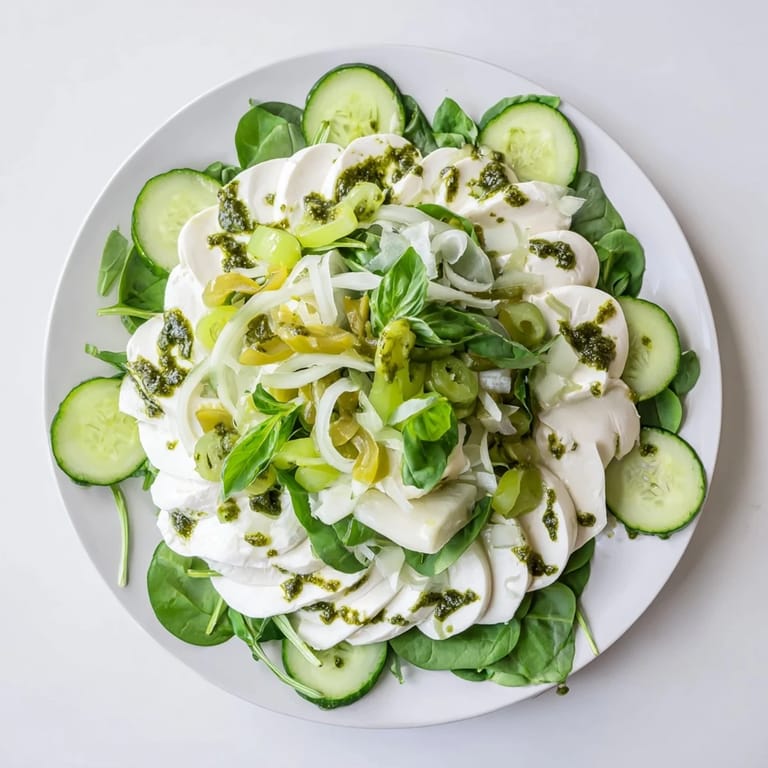
- Fresh mozzarella (100g): Tear it into pieces rather than slicing it; the irregular shapes create that organic river effect that makes this salad special.
- Crème fraîche or Greek yogurt (1 tbsp, optional): This is the secret to that creamy river. It softens the mozzarella's edges and makes it flow more naturally across your landscape.
Tired of Takeout? 🥡
Get 10 meals you can make faster than delivery arrives. Seriously.
One email. No spam. Unsubscribe anytime.
Instructions
- Build Your Base:
- Spread the baby spinach and arugula across a large serving platter as if you're painting the canvas. Don't crowd it—let the greens breathe. This is your foundation, and it matters.
- Layer With Purpose:
- Arrange the cucumber slices and diced bell pepper over the greens in no particular order except one: make it beautiful. Notice how the cucumber's paleness contrasts with the deeper spinach, how the bright pepper adds pockets of a different green. You're not just arranging food; you're composing a landscape.
- Add the Jewels:
- Scatter the kiwi slices, grape halves, and olive slivers across everything. Step back. Look at it. This is where the salad transforms from 'what's for dinner' into 'did you see this?' Let the different shades of green work together.
- Scatter the Basil:
- Tear fresh basil leaves and tuck them throughout—between the grapes, across the peppers, wherever there's a gap. This isn't about coverage; it's about aroma. The smell of basil is half the experience.
- Create the Dressing:
- In a small mixing bowl, whisk together the pesto, olive oil, and lemon juice. Taste it. Adjust the seasoning with salt and pepper. This dressing should taste bright, grassy, and alive.
- Pour the River:
- Drizzle the dressing evenly over the entire salad, letting it pool in the valleys between ingredients. Watch how it darkens the greens, how it brings everything to life.
- Create the Mozzarella River:
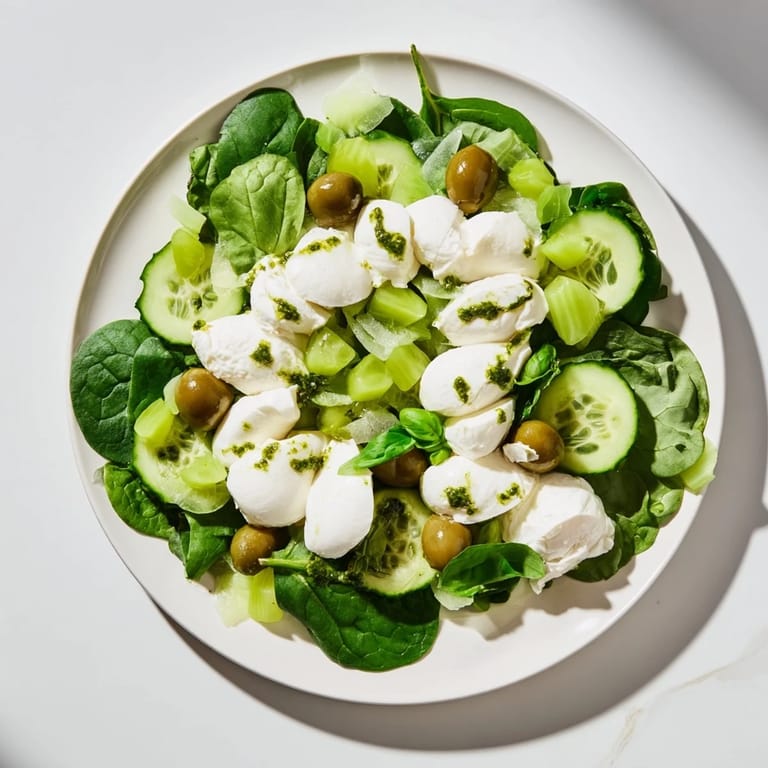
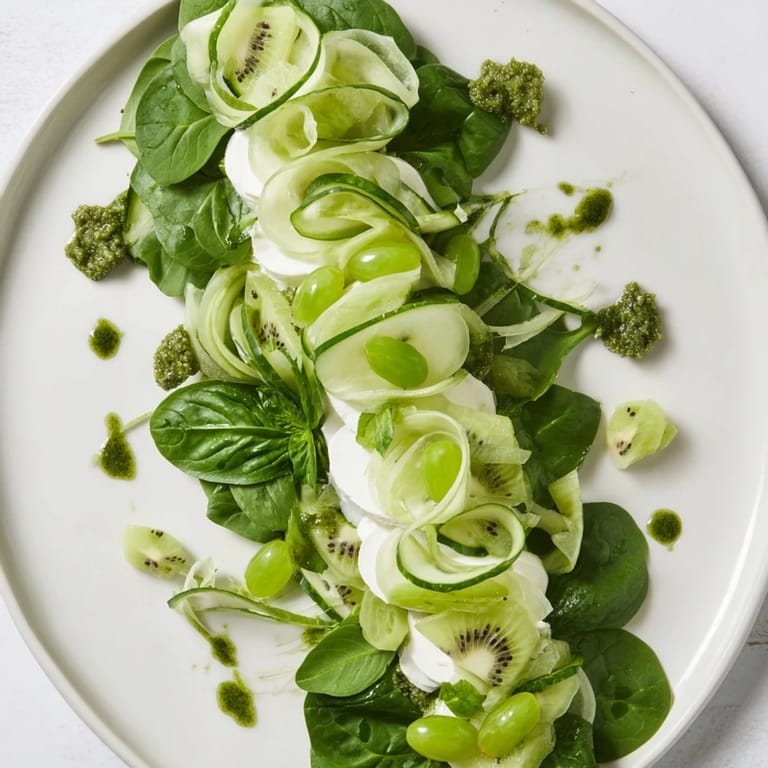
- This is the final flourish. Arrange the torn mozzarella pieces in a meandering line across the salad, like a river flowing through a green valley. If you're using crème fraîche or yogurt, dot it along the mozzarella line in small spoonfuls. This creates pockets of creaminess that contrast beautifully with the fresh cheese.
- Serve and Admire:
- Bring it to the table and give everyone a moment to see it before the tossing begins. This is important. Let them understand what went into making this beautiful.
 Pin it
 I remember my grandmother watching me make this the first time and saying, 'You're teaching people to look at their food.' That stuck with me. In our rush, we forget that eating is a sensory experience that begins with the eyes. This salad reminds us of that.
The Art of the Color Gradient
One of the revelations in creating this salad is understanding that 'green' is not one color—it's dozens. The pale, almost translucent green of cucumber, the deep forest of spinach, the bright lime of kiwi, the murky olive of the olives, the soft sage of basil. When you arrange these consciously, you're not just making salad; you're creating depth and visual interest. Your eye travels across the plate, finding new colors, new textures. This is why presentation matters—it enhances the actual eating experience.
Why the Mozzarella River Matters
The moment I added that river of mozzarella, the salad stopped being just about nutrition and became about emotion. Suddenly it was romantic, whimsical, like something you'd see in a magazine but actually made in your own kitchen. The contrast of that cool white against the greens creates a visual pathway that guides you through the dish. It's a little thing, but it's the thing that makes people remember this salad and ask for the recipe.
Variations and Occasions
This salad is beautifully flexible. For a spring dinner party, it's elegant exactly as written. For a vegan gathering, swap the mozzarella for a plant-based alternative and use vegan pesto—the salad loses nothing. For something with more texture, scatter toasted pistachios or pumpkin seeds just before serving, letting them nestle between the other ingredients. For a lighter version, use less dressing and more greens. For a heartier version, add grilled chicken or white beans to the side, so guests can customize their protein. This is a salad that adapts to what you need.
- Make it crunchier by adding toasted nuts or seeds just before service
- Serve it alongside a crisp Sauvignon Blanc or citrusy sparkling water for a complete experience
- Prepare all components ahead of time, but only assemble within 15 minutes of serving to maintain the visual impact and texture
 Pin it
 Every time I make this salad, I'm reminded that cooking isn't just about feeding people—it's about creating moments they'll remember. This is that kind of dish.
Recipe Questions & Answers
- → What are the key green ingredients used?
Key green ingredients include baby spinach, arugula, cucumber, green bell pepper, kiwi, green grapes, green olives, and fresh basil leaves.
- → How is the creamy element incorporated?
Fresh mozzarella is arranged in a flowing river across the salad, with optional crème fraîche or Greek yogurt added for extra creaminess.
- → Can this salad be made vegan?
Yes, substitute the mozzarella with a plant-based cheese and use vegan pesto to keep the vibrant layers intact.
- → What dressing is used to complement the salad?
A simple dressing made of basil pesto, extra-virgin olive oil, lemon juice, salt, and black pepper provides herbal, tangy notes enhancing the freshness.
- → What are some serving suggestions?
Serve fresh on a large platter to showcase the layers; it pairs well with crisp Sauvignon Blanc or a citrusy sparkling water.
- → Are there any common allergens involved?
The salad contains dairy from mozzarella and optional crème fraîche, and pesto may contain nuts. Always check ingredient labels for allergens.