 Pin it
 The first time I made an egg flight, I was trying to impress someone who claimed they'd seen it at a trendy brunch spot downtown. I had three eggs, good bread, and the sudden realization that I could cook them three different ways on one plate. Twenty minutes later, as I arranged the scrambled, soft-boiled, and fried eggs side by side, something clicked—this wasn't just breakfast, it was a little moment of playfulness in the kitchen, proof that the simplest ingredients could feel special when you paid attention.
I made this for a friend who'd been running on coffee and regret for weeks, and watching their face when they saw the three different eggs arranged like a tasting menu was worth every minute. They called it 'breakfast architecture,' and I've never made a single egg the same way since.
Ingredients
- 1 large slice sourdough or country-style bread: The foundation matters—you need something sturdy enough to hold three different egg preparations without falling apart, with enough character to stand up to creamy scrambled, jammy soft-boiled, and runny fried all at once.
- 1 large egg, scrambled: This is your creamy anchor, the one that ties the plate together.
- 1 large egg, soft-boiled: The jammy yolk in the center is where the magic lives.
- 1 large egg, fried: The drama, the runny yolk waiting for that first bite.
- 1 tbsp unsalted butter: Split between the scrambled and fried eggs so neither sticks or burns.
- 1 tsp olive oil: A little richness for the fried egg, keeping the whites crispy while the yolk stays tender.
- Salt and freshly ground black pepper, to taste: Season each egg separately—they'll each taste different and deserve their own adjustment.
- Chopped fresh chives, chili flakes, microgreens (optional): The finishing touches that make it feel intentional, like you weren't just cooking breakfast but creating an experience.
Tired of Takeout? 🥡
Get 10 meals you can make faster than delivery arrives. Seriously.
One email. No spam. Unsubscribe anytime.
Instructions
- Toast your bread until it's golden and crisp:
- Preheat the oven to 180°C (350°F) and pop your bread on a baking sheet for 5–7 minutes. You want it firm enough to support three different eggs without getting soggy, with just enough give that it's still pleasant to eat.
- Soft-boil your egg with precision:
- Bring a small pot of water to a boil, gently lower one egg in, and cook for exactly 6½ minutes. This is the secret—any less and the yolk is too runny, any more and it starts to set. Transfer to ice water immediately, peel it carefully (the shell comes easier under cold running water), and halve it so that jammy yolk is visible.
- Scramble one egg until it's creamy and just set:
- Heat ½ tablespoon butter over medium-low heat in your nonstick skillet, whisk your egg with a pinch of salt and pepper, then pour it in. The key is patience—stir gently with a spatula, letting it cook slowly so it stays soft and custardy instead of turning into rubber. Remove it from heat while it still looks slightly underdone; it'll continue cooking on the plate.
- Fry your final egg with a runny yolk:
- Wipe out the skillet, add the remaining ½ tablespoon butter and the olive oil over medium heat, then crack in your egg. Fry for 2–3 minutes until the whites are set but the yolk still jiggles when you tilt the pan, then season with salt and pepper.
- Compose your breakfast tasting menu:
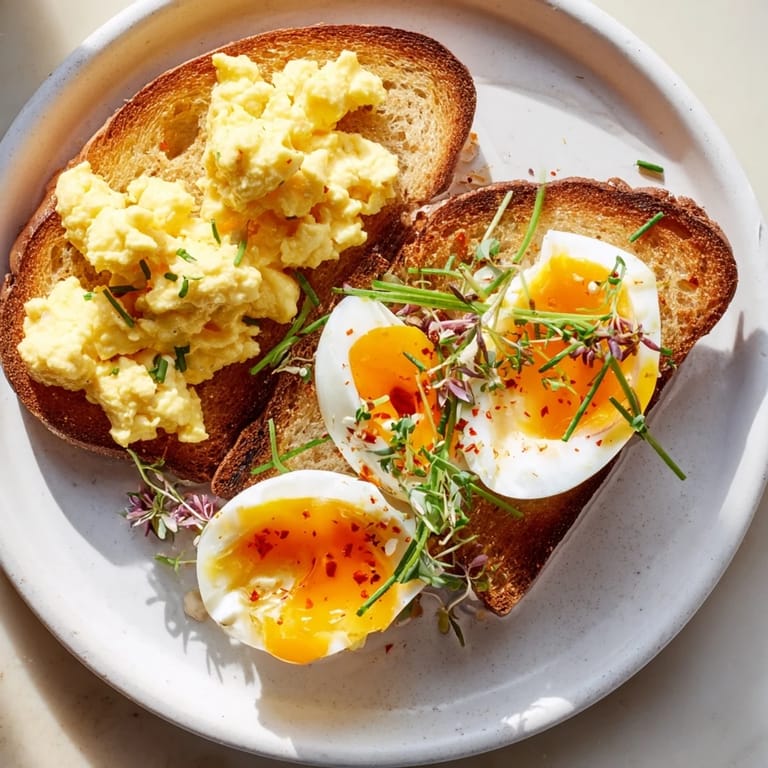
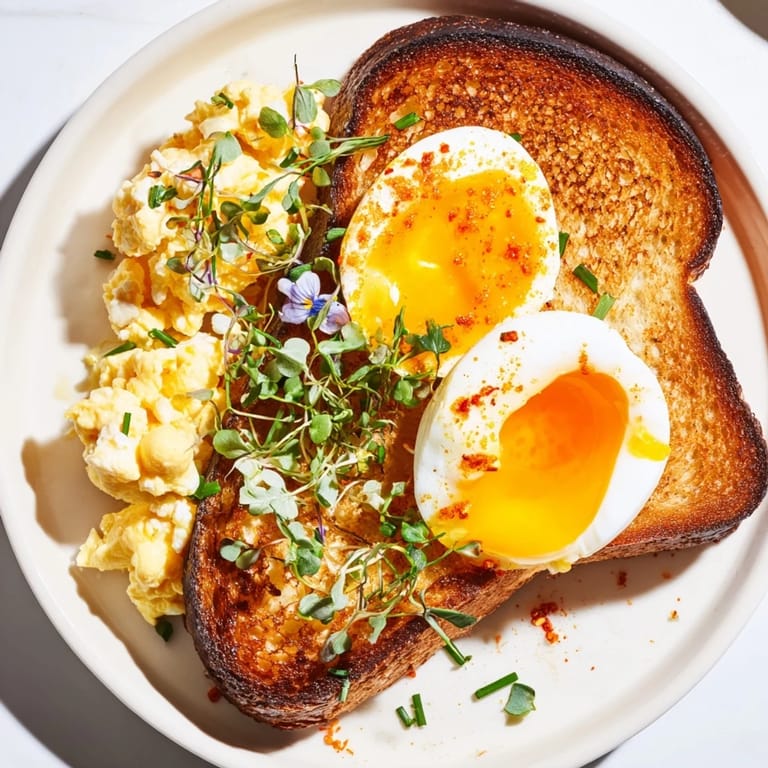
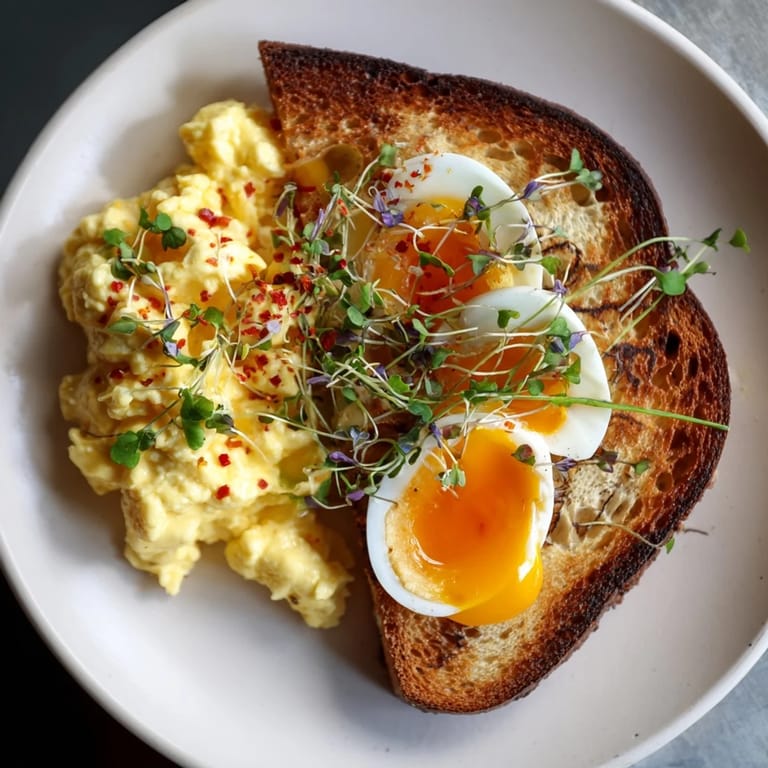
- Place the toasted bread on a plate and arrange each egg preparation on its own section—scrambled on one third, halved soft-boiled on the second, and fried on the last. This visual clarity is what makes it a flight instead of just a messy plate.
- Finish with intention:
- Scatter over chives, chili flakes, and microgreens if you have them. Serve immediately while everything is still warm and the fried yolk hasn't started to set.
 Pin it
 There's something almost meditative about cooking three versions of the same ingredient on one plate, a reminder that you can take the most basic breakfast building block and turn it into something that feels both playful and intentional. It's the kind of dish that makes you slow down and actually taste your food instead of rushing through another weekday morning.
The Art of Cooking Eggs Three Ways
Each cooking method is teaching you something different about heat and timing. The scrambled egg is all about low, patient heat and constant movement. The soft-boiled egg is about precision—a couple of minutes either way changes everything. The fried egg is about confidence, knowing when to step back and let the residual heat do the work. Once you understand these three techniques, you can cook eggs in your sleep, but more importantly, you'll understand how to adjust heat and time for almost any dish.
Why This Dish Works
What makes an egg flight special isn't complexity—it's contrast. You're getting creamy next to jammy next to runny, warm bread catching the yolk, all of it happening in the same few bites. It's proof that you don't need fancy ingredients or hours in the kitchen to make breakfast feel like something worth waking up for, which is a lesson that extends way beyond just eggs.
Making It Your Own
The beauty of this dish is that it's flexible enough to become whatever you need it to be. Some mornings you might want richness and comfort, other mornings you want to add a sharp edge with something unexpected. This is the skeleton—the part that never changes—but you get to decide what story you're telling with your breakfast.
- Try layering avocado slices, smoked salmon, or sautéed spinach under or around the eggs for extra nutrition and flavor.
- Swap sourdough for gluten-free bread, focaccia, or even a thick slice of brioche if that's what you're in the mood for.
- Experiment with poached eggs instead of fried, or a thin omelette folded neatly instead of scrambled, to keep things interesting.
 Pin it
 This dish reminds me that the most satisfying meals aren't always the most complicated ones—sometimes they're just about taking care and intention with what you already have. Make it for yourself on a morning when you need to feel a little bit special.
Recipe Questions & Answers
- → How do I achieve the perfect soft-boiled egg?
Bring water to a gentle boil and cook the egg for about 6½ minutes. Immediately transfer to ice water to halt cooking and make peeling easier.
- → What bread works best for this toast?
Sourdough or country-style bread holds up well to the various egg textures and provides a crisp, hearty base.
- → Can I substitute the egg styles?
Yes, try poached or omelette variations for scrambled or fried eggs to suit your taste preferences.
- → How can I add extra flavor to the toast?
Enhance with garnishes like chopped chives, chili flakes, or microgreens, or add avocado slices or smoked salmon for richness.
- → What cooking fats are recommended?
Unsalted butter and olive oil provide a rich flavor and help achieve the perfect texture for each egg preparation.