 Pin it
 There's something about a weeknight when you're standing in front of the fridge, hungry and uninspired, that makes you reach for pasta. One evening, I had orzo hiding in the back of the pantry and fresh spinach that was threatening to go bad, so I decided to throw them together with cream and cheese. Twenty minutes later, I had a dish so silky and satisfying that it became the thing I crave when I want comfort without fuss.
I made this for my friend Marcus who had just moved into his first apartment with a kitchen barely bigger than a closet. He watched from the counter as everything happened in one skillet, and by the time we were eating, he was already planning to make it again. He texted me the next week saying it was the first dish he'd cooked that didn't feel like a disaster.
Ingredients
- Orzo pasta: These rice-shaped noodles cook faster than regular pasta and absorb the sauce beautifully instead of sitting in it.
- Unsalted butter and olive oil: Butter builds flavor while oil prevents sticking and adds richness to the base.
- Garlic and onion: The aromatics that make people ask what smells so good, even though the dish takes almost no time.
- Vegetable broth and whole milk: Broth brings depth while milk creates that creamy texture without heaviness.
- Parmesan and cream cheese: Parmesan adds sharpness and helps the sauce cling to the pasta, while cream cheese melts into silky smoothness.
- Baby spinach: Fresh, tender, and it wilts into almost nothing, which is exactly what you want here.
- Salt, pepper, and optional nutmeg: Nutmeg is a whisper, not a shout, but it teaches you something about how spices work together.
Tired of Takeout? 🥡
Get 10 meals you can make faster than delivery arrives. Seriously.
One email. No spam. Unsubscribe anytime.
Instructions
- Build the base:
- Melt butter with olive oil in a large skillet over medium heat. Add the onion and let it soften, listening for that gentle sizzle, about 3 minutes. Stir in garlic and cook for another minute until the kitchen smells like you know what you're doing.
- Toast the orzo:
- Add the dry pasta and stir it around for 2 minutes. You're looking for it to turn slightly golden and smell nutty, which means it's awake and ready.
- Introduce the liquid:
- Pour in broth and milk, stirring to make sure nothing sticks to the bottom. Bring it to a gentle simmer and turn the heat down to medium-low so it bubbles softly, not aggressively.
- Let it cook:
- Stir frequently as the orzo absorbs the liquid, about 10 to 12 minutes total. You'll see it transform from a soupy mixture to something almost creamy as the pasta releases its starch.
- Add the cream:
- Turn off the heat and stir in cream cheese and Parmesan until they melt into the warm pasta. If it seems thick, a splash of milk loosens it right up.
- Finish with spinach:
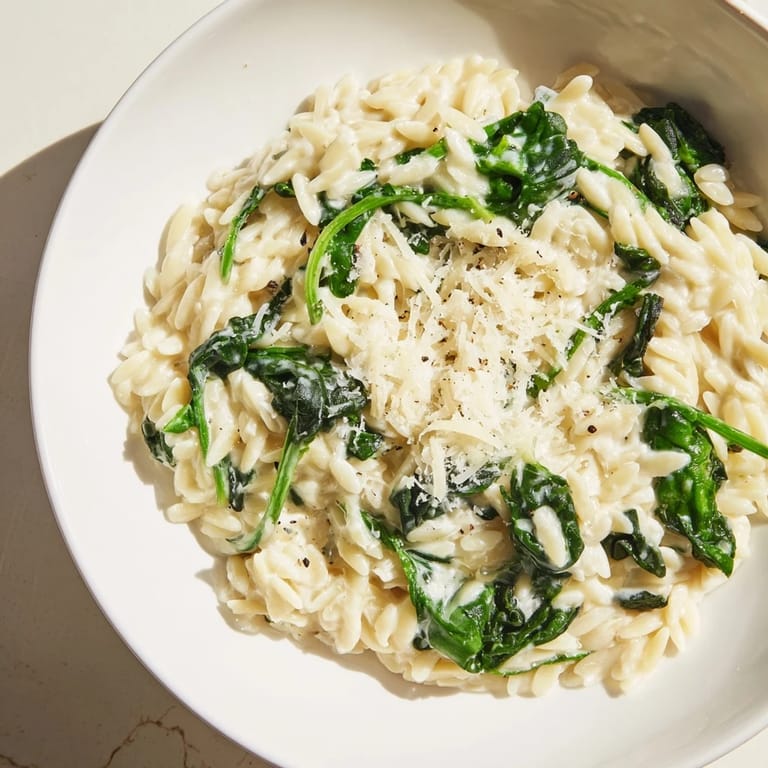
- Toss in the chopped spinach and stir for a minute or two until it darkens and wilts completely. Taste it now and adjust with salt, pepper, and just a pinch of nutmeg if you're feeling adventurous.
- Serve:
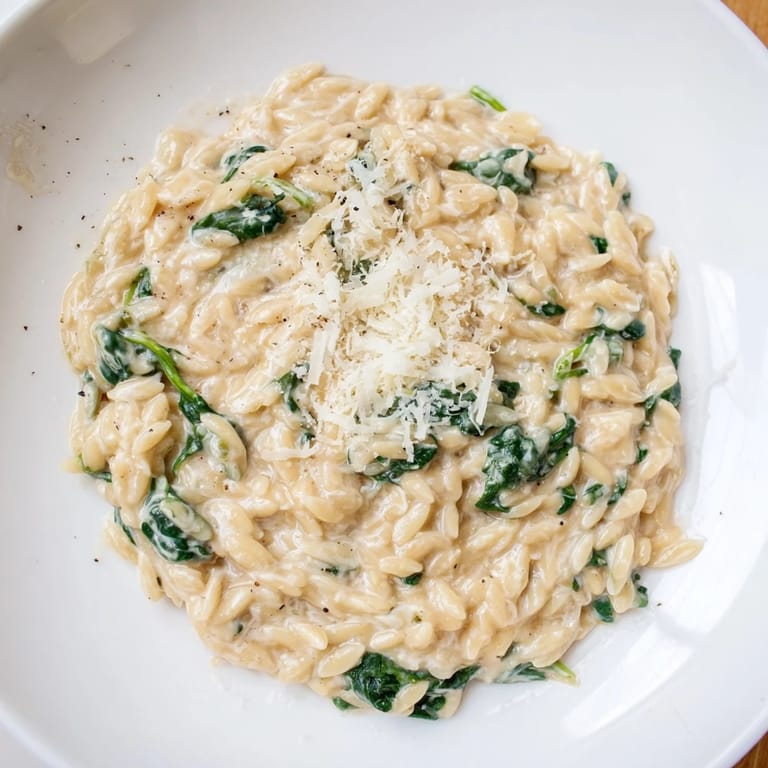
- Transfer to bowls while it's hot, top with extra Parmesan and a crack of fresh black pepper.
 Pin it
 There was a moment, maybe the third time I made this, when my partner took a bite and said, 'This tastes like you actually care.' It stuck with me because you don't need fancy ingredients or hours of time to feed someone something that feels considered.
Why This Works as a Complete Meal
Orzo is a bridge between pasta and risotto, soaking up sauce while staying tender rather than swimming in it. The spinach adds vitamins and color without announcing itself, and the Parmesan gives you that umami note that makes you take another bite. You could add chicken or mushrooms if you want protein that wasn't already accounted for, but honestly, the cheese and cream do enough lifting that this is satisfying as written.
The Texture Game
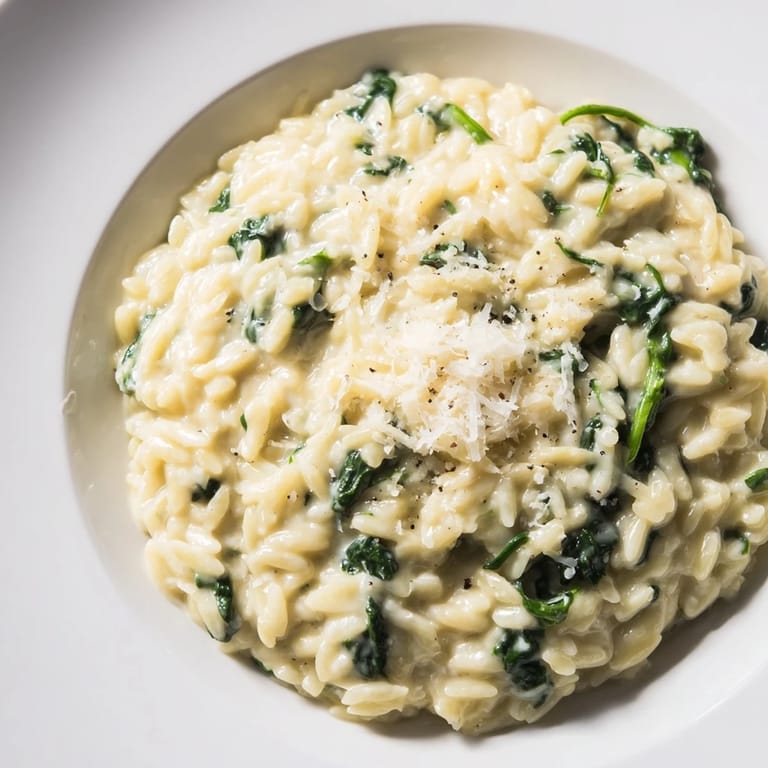
The secret to this dish is that you're aiming for creamy, not soupy, which means timing matters more than ingredients. Watch as the orzo cooks and the liquid gradually reduces, thickening naturally as the pasta releases its starch. By the time you add the cheese, you're not trying to create a sauce from nothing, you're finishing something that's already becoming its best self.
Variations and Moments of Change
Once you understand how this works, you can shift it in small directions without breaking it. Heavy cream instead of milk makes it richer, mushrooms add earthiness, a handful of cherry tomatoes at the end brighten everything up. Even a teaspoon of lemon zest stirred in at the very end wakes the whole dish up.
- If you use gluten-free orzo, stir a bit more often since it can be more delicate than regular pasta.
- Add the spinach at the very end so it stays bright green instead of turning dark and tired.
- Taste before you finish because you might not need any salt if your broth is already seasoned.
 Pin it
 This dish taught me that sometimes the best meals aren't the ones you plan for weeks. They're the ones that happen because you had the right things on hand and ten minutes to focus. That's when cooking stops being a task and becomes something you do because you want to.
Recipe Questions & Answers
- → Can I use a different type of pasta instead of orzo?
Yes, small pasta shapes like couscous or small shells can work similarly, but cooking times may vary.
- → How can I make this dish richer?
Substitute some of the milk with heavy cream or add extra Parmesan to deepen the flavor and creaminess.
- → Is it possible to add protein to this dish?
Adding cooked chicken, sautéed mushrooms, or even chickpeas can boost protein content without altering the dish's texture much.
- → What is the best way to avoid the orzo sticking during cooking?
Stir frequently while simmering and maintain a gentle simmer to prevent clumping and sticking.
- → Can I prepare this dish gluten-free?
Using gluten-free orzo pasta ensures the dish is suitable for gluten-sensitive diets without compromising taste.