 Pin it
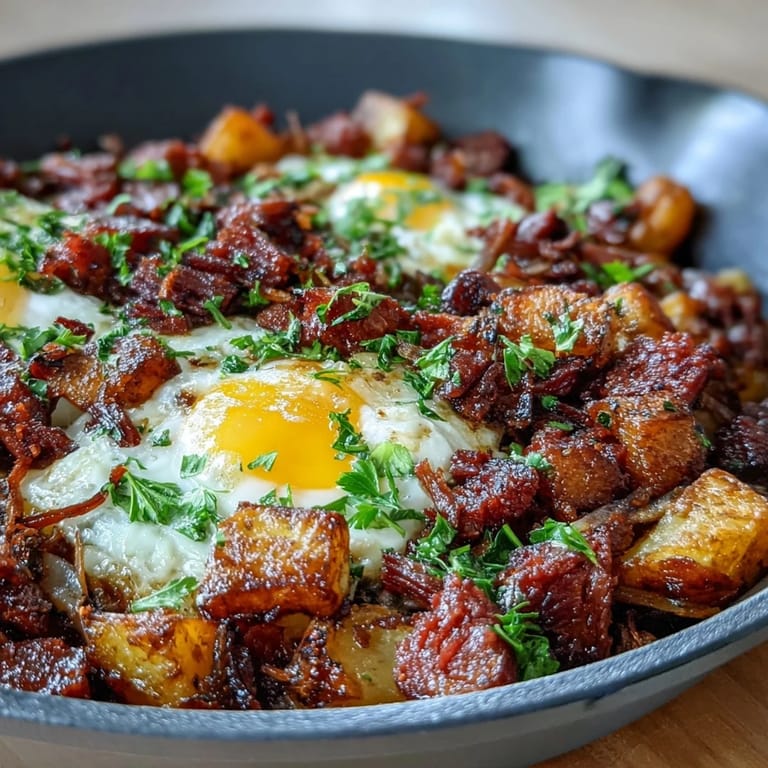
 There's something about the sizzle of corned beef hitting hot oil that makes a Saturday morning feel less like routine and more like an event. My neighbor once stopped by unannounced around 9 AM, drawn in by the smell alone, and I found myself plating up this skillet without even thinking twice—the kind of dish that invites people to the table without needing an invitation. It's comfort food that doesn't apologize, built on crispy edges, soft yolks, and the kind of flavors that make breakfast feel substantial enough to carry you through the day.
I made this for my dad's birthday brunch last spring, and he ate two servings without saying much—which, coming from him, meant everything. The potatoes were perfectly golden, the eggs weren't overcooked, and somehow it felt like more than just breakfast; it felt like showing up, like saying I remembered how he takes his mornings. He asked for the recipe, which he never does, so I knew I'd nailed something.
Ingredients
- Cooked corned beef, 340 g (12 oz), diced: Using pre-cooked corned beef saves you hours and is honestly the smart move—it's already seasoned and tender, you just need to render out those edges until they're crackling and brown.
- Yukon Gold potatoes, 500 g (1 lb), peeled and diced: These have just enough starch to crisp up beautifully without falling apart, and their buttery flavor is genuinely worth seeking out over russets here.
- Yellow onion, 1 medium, finely chopped: The sweetness balances the saltiness of the corned beef, and when it caramelizes slightly, it becomes almost candy-like in texture.
- Green bell pepper, 1, diced: This adds freshness and prevents the whole thing from feeling too heavy—it's your permission to feel virtuous about eating hash for breakfast.
- Garlic, 2 cloves, minced: Two cloves is the exact point where you taste garlic without it shouting over everything else.
- Fresh parsley, 2 tablespoons chopped, plus extra for garnish: This is your flourish, your final act of care—it brightens the whole plate and costs nothing but a second of chopping.
- Eggs, 4 large: The yolk is the whole point; treat them gently so they can do their job.
- Unsalted butter, 2 tablespoons: Butter is non-negotiable here because it browns and adds depth that oil alone never quite achieves.
- Olive oil, 2 tablespoons: Use something you wouldn't be offended to cook with, but save your fancy stuff for finishing.
- Smoked paprika, 1/2 teaspoon: This is your secret weapon—it adds a campfire-like depth that makes people ask what the spice is.
- Black pepper and kosher salt, 1/2 teaspoon each: Kosher salt's larger crystals dissolve more slowly, giving you better control over seasoning than table salt ever will.
Tired of Takeout? 🥡
Get 10 meals you can make faster than delivery arrives. Seriously.
One email. No spam. Unsubscribe anytime.
Instructions
- Heat your pan and start with potatoes:
- Get a large skillet over medium heat with half the oil and butter, then add your diced potatoes. You want them to start with direct contact with the hot surface—don't stir constantly, let them sit for a minute or two so they develop those golden, crispy bottoms. They'll take about 10 to 12 minutes and should be tender inside but still have some structural integrity.
- Build your flavor base:
- Once potatoes are almost there, add your remaining fat along with onions, bell pepper, and garlic. This is when your kitchen starts smelling like Saturday morning feels—grounding, warm, promising. Four minutes is usually enough for the vegetables to soften without turning into mush.
- Bring in the corned beef:
- Turn up the heat to medium-high and add your diced corned beef, then sprinkle the smoked paprika, salt, and pepper across the top. Stir everything together and let it sit undisturbed for a couple minutes so the meat edges brown properly—you're after golden, crispy bits that catch in your teeth, not softness.
- Create wells and add eggs:
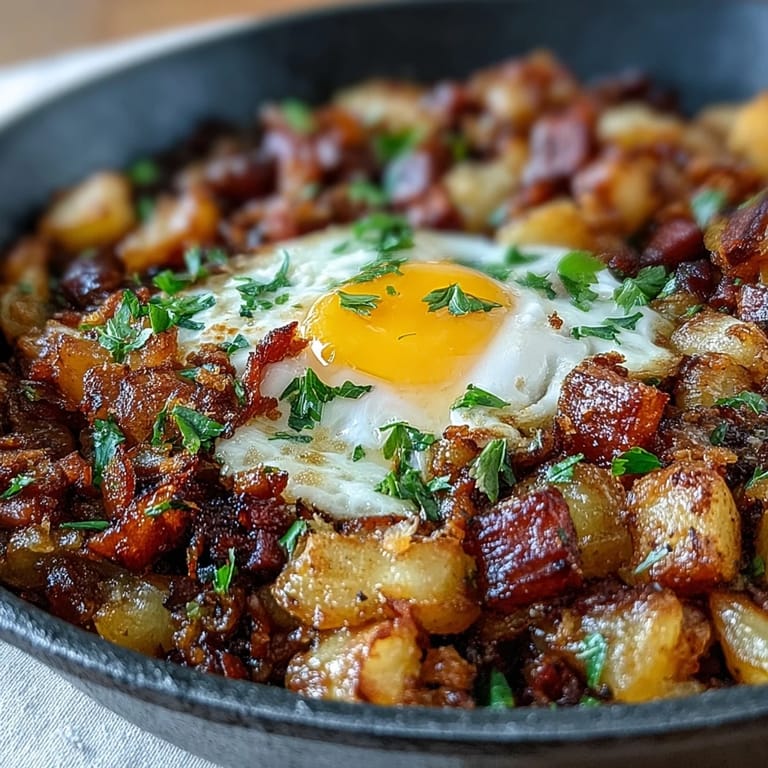
- Use the back of a spoon to make four shallow indentations across the hash—think of them as little nests. Crack an egg into each one, trying not to disturb the yolk too much. This matters more than you'd think for keeping that yolk runny.
- Low and slow finish:
- Reduce heat to medium-low, cover the skillet, and let it sit for 5 to 7 minutes depending on how you like your eggs. The steam does the work here, so resist the urge to peek more than once.
- Finish and serve:
- When the whites are set but the yolks still jiggle slightly if you shimmy the pan, scatter fresh parsley over everything and take it straight to the table. This is a dish that doesn't improve with sitting.
 Pin it
 There was a Tuesday when my teenage nephew came downstairs smelling this and actually asked what was for breakfast instead of heading straight for cereal—small moments that remind you why cooking matters. It's not fancy food, but it's the kind that makes people feel cared for without any fuss.
The Potato Question
Yukon Gold potatoes are genuinely worth the slight premium because they have more natural butter flavor and hold together better during cooking. If you're using russets or reds, just know the texture will be slightly different—russets get crumbly and reds stay firmer, both fine, just different. The key thing is to cut them all to roughly the same size so they cook at the same pace, which is where most people's problems start and end.
Getting Your Eggs Right
Those shallow wells you're making aren't just for presentation—they keep the eggs from rolling around and breaking the yolk on contact with the hash. If you're nervous about eggs, crack them into a small bowl first and slide them gently into the wells, which takes an extra 30 seconds and eliminates most of the risk. The cover is your friend here because it traps steam and cooks the top without you needing to flip or fuss.
Making It Your Own
This recipe is honestly a foundation, not a prison—the corned beef and potatoes are non-negotiable, but everything else is negotiable. Some mornings I add sharp cheddar before serving, other times a splash of hot sauce cuts through the richness perfectly.
- Swap in sweet potatoes if you want earthiness, or add a handful of spinach if you're feeling virtuous.
- A sprinkle of smoked paprika can become cayenne if you want heat, or disappear entirely if you prefer subtlety.
- Serve with toasted bread to push the yolk onto something, or skip it entirely if carbs aren't what you're after.
 Pin it
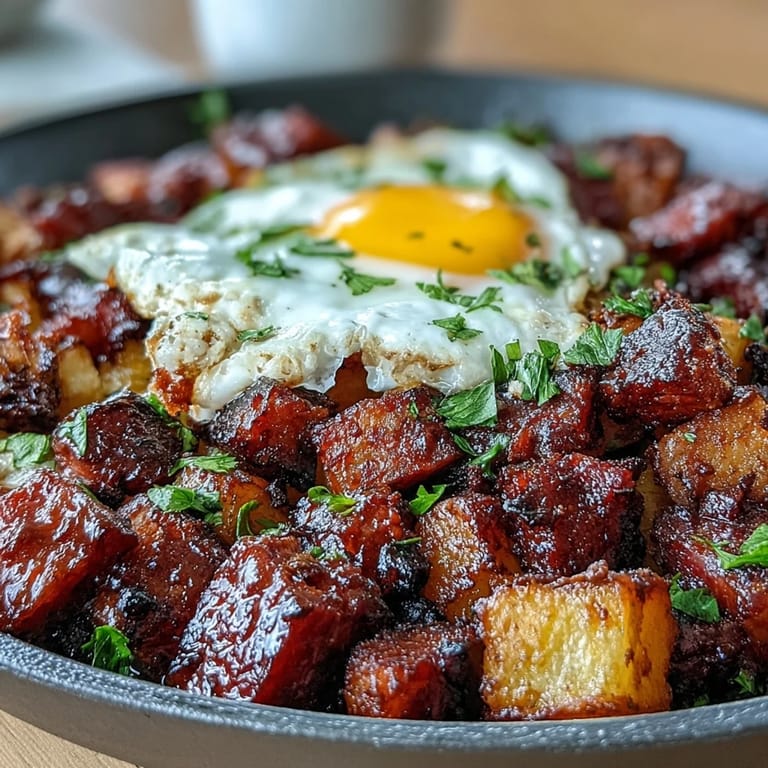
 This is the kind of breakfast that tastes like someone cared enough to stand at the stove for a few minutes—which, honestly, is all it takes. Make it once and you'll find yourself reaching for it on mornings that need a little more intention.
Recipe Questions & Answers
- → What type of potatoes work best?
Yukon Gold potatoes are ideal for their creamy texture and ability to crisp nicely, though russet or red potatoes can be swapped in.
- → Can I prepare this dish gluten-free?
Yes, as long as the corned beef is certified gluten-free, this skillet is suitable for a gluten-free diet.
- → How should the eggs be cooked for best results?
Crack eggs into wells in the hash and cook covered over medium-low heat for 5–7 minutes to achieve runny yolks; adjust timing for firmer eggs.
- → What seasonings enhance the dish's flavor?
Smoked paprika, black pepper, and kosher salt add depth, while fresh parsley brings a bright finish. Optional hot sauce or cheddar cheese can add extra flavor.
- → Can I make substitutions for a lighter version?
Consider using sweet potatoes or adding spinach for a lighter twist without sacrificing flavor or texture.